The ability to replace my phone's battery? Yes, please.
Thongchai S/Shutterstock
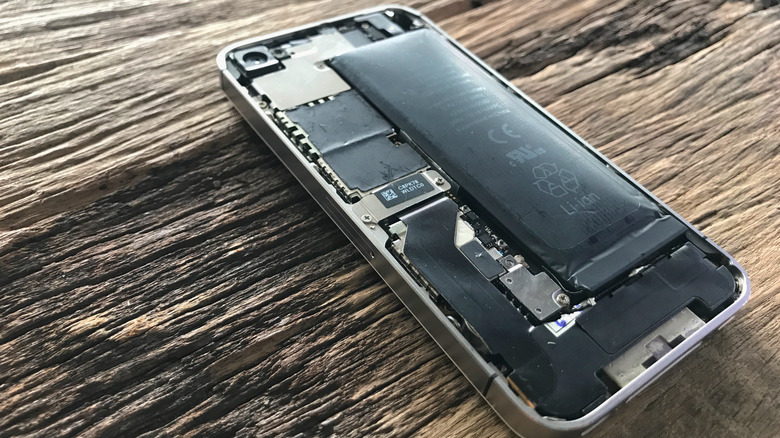
There was a time when replacing a phone's battery was as easy as popping the back cover off and lifting the battery from its slot with your fingernail. While you can still find a few devices with easily replaceable batteries these days, the design isn't anywhere near mainstream anymore. They're pretty much obsolete, and there are many reasons why they are, which we'll get to later. But a soon-to-be-implemented European Union regulation could bring some form of them back in the near future.
Are there still any smartphones with removable batteries?
One model you can still get in 2026 is the Samsung Galaxy XCover 7 Pro, a military-grade rugged phone with an easily swappable 4,350mAh battery. It was built for tough environments, and the idea is that you can replace its battery if you lose power while hiking or mountain climbing.
Another model you can get today with an easily replaceable battery is the Fairphone 6. It's built a bit differently than the earlier models in the series, which come with back covers you can easily take off. It uses components that make it slimmer, but that also means its battery is held in place with five screws. The battery is still pretty easy to replace, but it takes a bit more effort now.
So why aren't phones with swappable batteries a thing anymore?
It's a combination of several factors, including people's preference for thinner designs. Phones with removable batteries require certain parts and mechanisms, like screws and clips, that typically make them thicker. Companies also have more freedom to squeeze components into a thinner body in creative ways if they don't have to think about how to position a battery slot so that it's easily accessible.
In addition, people now prefer premium materials like glass and aluminum for their handhelds. Glass, especially, may be too fragile for a removable back panel. The Fairphone 6's body and back panel are made of plastic. The Galaxy XCover 7 Pro's is, as well — it's even pretty flexible. Samsung's Galaxy S5, another model with a removable battery released in 2014, also has a plastic chassis.
Most modern phones have sealed bodies to protect them from dust and water, as well. The iPhone 17 series, for instance, has an IP68 water and dust resistance rating and can remain submerged in 19-foot-deep water for 30 minutes. Removable back covers could pop out when dropped or mishandled, making phones more vulnerable to water and dust.
However, it's not entirely impossible for a phone to have a removable back cover and battery and still be water-resistant: The Samsung Galaxy XCover 7 Pro, for example, has an IP68 rating. Samsung told GSM Arena that it put seals on different parts of the phone, such as the camera, to protect its components. The phone's back cover also has gaskets that align with the SIM and the battery slots to make sure they're protected.
Finally, batteries that are easy to remove and replace could make people hold on to their devices longer instead of upgrading more frequently. And let's just say companies wouldn't love that.
Will phones in 2027 have replaceable batteries?
Starting in February 2027, a new law will come into force in the European Union. The law, which has been years in the making, requires companies to sell phones and tablets with removable batteries in the bloc. It's meant to extend the lifespan of devices and reduce waste, as well as make it easier to get raw materials like lithium and cobalt from old batteries.
Because companies are less likely to release a special version just for the EU than to simply adopt a new universal design, the rest of us could be getting removable batteries, as well. The best example of this is the iPhone, which now comes with a USB-C port instead of the Lightning port, because of an EU regulation that made USB-C the common charging standard in the region.
Despite the upcoming rule, you still probably won't see a lot of phones with back covers and batteries you can easily pry off with your nails. According to the language in the regulation, a battery is "considered to be removable by the end-user" if it can be removed with commercially available tools like screwdrivers. They must not require specialized tools, "unless they are provided free of charge," and they can't use adhesives that would need heating or solvents to remove. That means phones could still have back covers and batteries secured by screws, and companies could just ship them off with special tools if they use anything that can't be removed by standard screwdrivers.
However, there is a carveout in the rules that could mean Apple doesn't have to redesign the iPhone. It states that companies can just provide replacement batteries to professional repairers (not end users) if their devices meet certain requirements. First, the model's battery must have a remaining capacity of at least 83 percent in a fully charged state after 500 charge cycles. After 1,000 charge cycles, the device's battery health must be at least 80 percent. Finally, the device must have an IP67 rating, at least, which means it's dust-tight and can survive temporary immersion in water.
On its support page, Apple says the batteries of iPhones 15 and newer were designed "to retain 80 percent of their original capacity at 1,000 complete charge cycles under ideal conditions." And as we mentioned earlier, the iPhone 17 series has a rating of IP68. Of course, devices other than the iPhone could be exempted, as well, if they meet those requirements. In other words, you will likely see a bunch of new phones starting next year with batteries that are relatively easy to replace, but companies may not have to drastically change the designs of their more expensive models.