 10 hours ago
4
10 hours ago
4
 The iPhone Duo, Apple’s first foldable, automatically adjusts its display to its orientation.Abrar Al-Heeti/CNET
We may not want to pay $2,000 for it, or couldn’t spend that even if we wanted to, thanks to RAMaggedon-high prices, but there’s no doubt that the centerpiece of Apple’s primary iPhone launch this year was the foldable iPhone Duo. From a bread-and-butter perspective, though, the iPhone 18 Pro and Pro Max, despite a price increase, were the highlight of the “Surprise and Shine” event on Wednesday. Apple took the opportunity to raise the prices of much of the rest of the line, though.
Much of what we’re treated to during these launch events is a recap of the new capabilities of their operating systems, which have usually been available in beta since the developers conferences where they get announced.
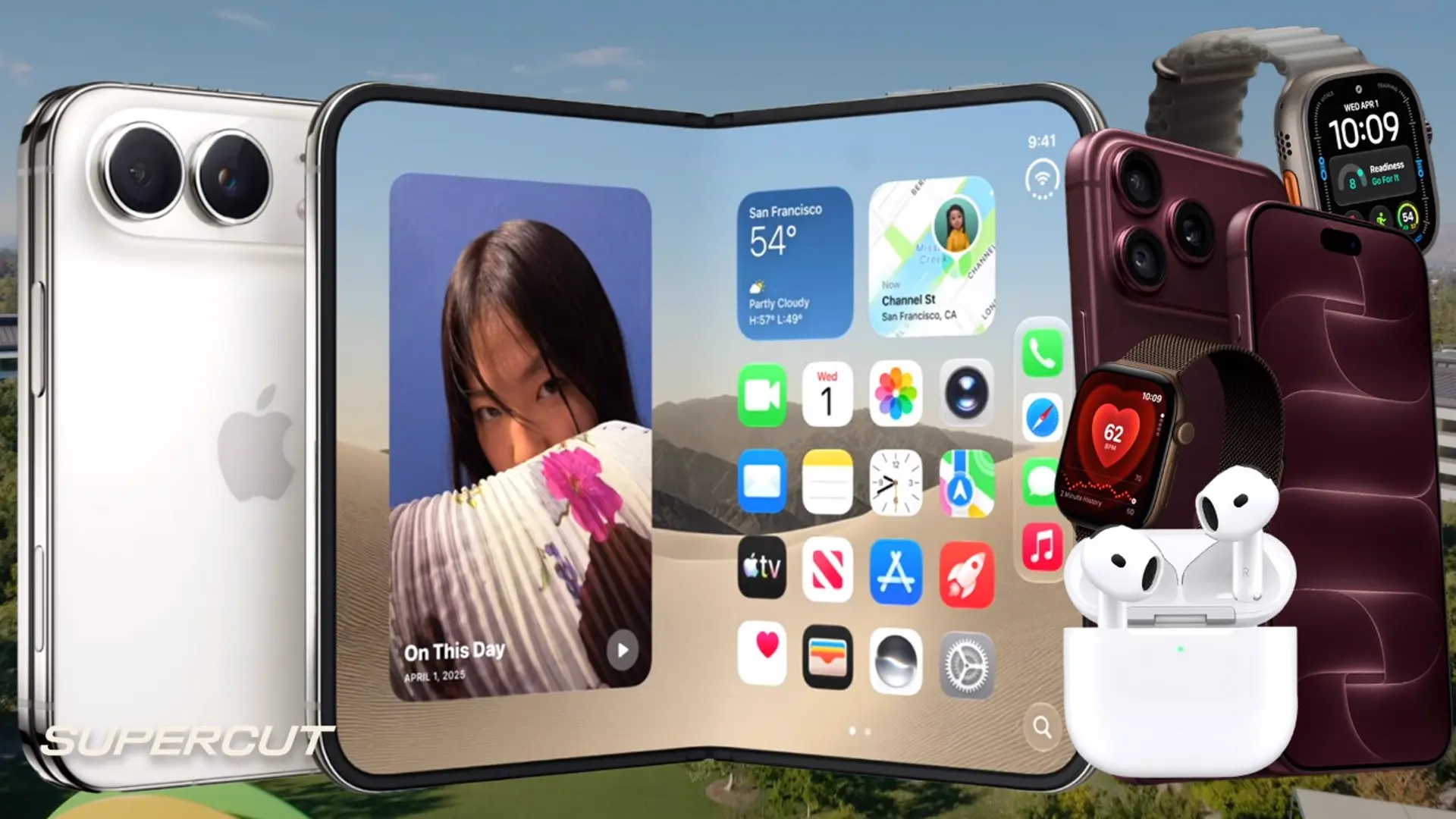
For Apple, that means demonstrations of its updated iOS 27 and WatchOS 27, announced at WWDC in June, running on the new hardware. But we’ve been using the OSes for a while and don’t have to rely on passing demos during the hardware announcement: Here’s our experience with the beta and what to know about iOS 27 before you start using it, as well as our take on the new Siri in WatchOS.
On the upside, the memetic reaction to the Duo brought out the creative snarkers of social media.
Check out our complete coverage of Apple’s September 2026 iPhone launch and play-by-play commentary on the event in our archived live blog.
Preorders for the iPhone 18 Pro and Pro Max and Watches start soon, and they ship a week later. The Duo is up for preorder starting and ships at the end of October. And don’t forget the cases.
John Ternus’ event debut as CEO
After the initial cinematic opening promoting the new variable-aperture camera on the iPhone 18 Pro and Max, Tim Cook delivered a clever, well-done segue into Ternus’ first Apple launch as CEO.
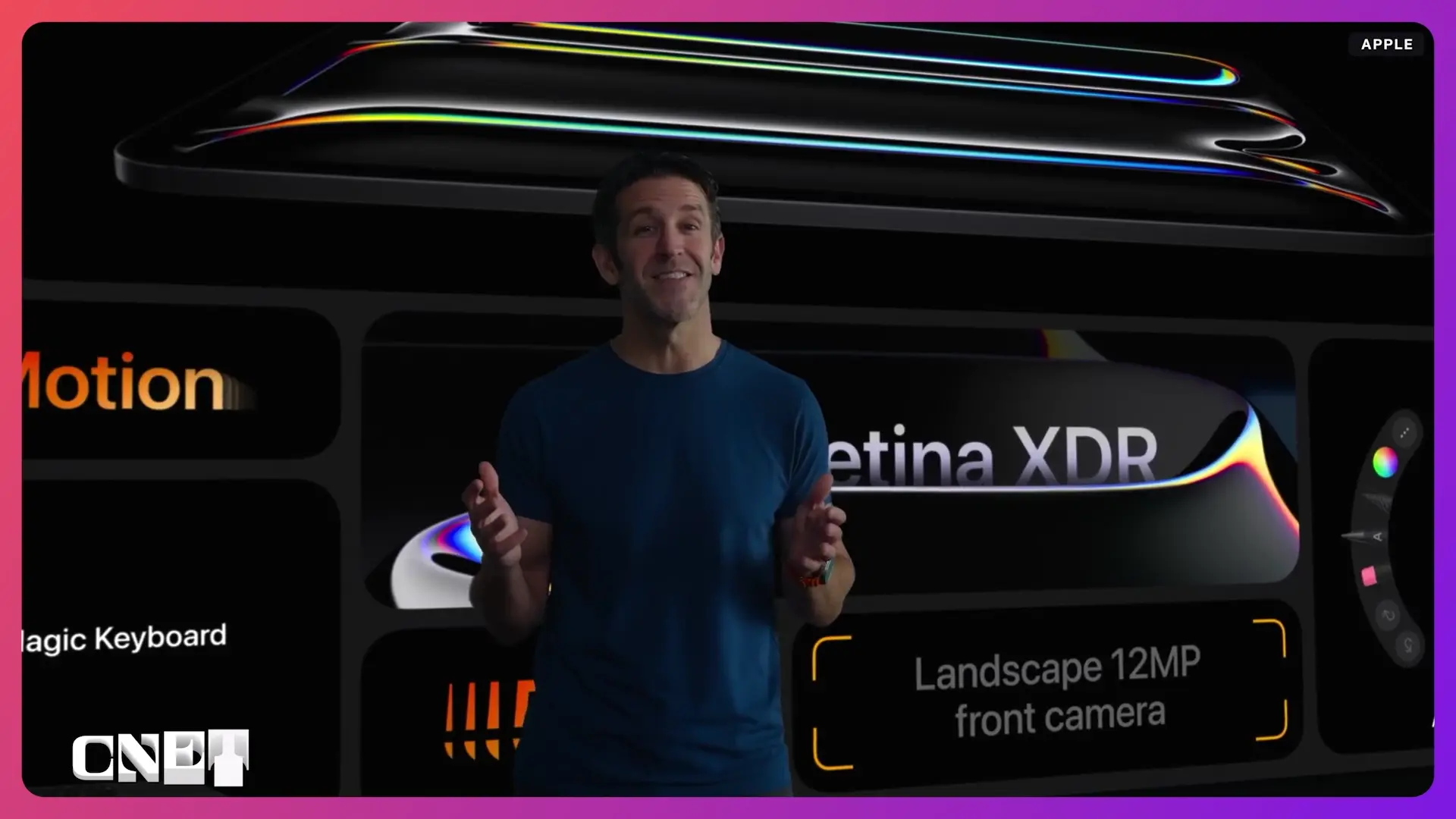
Ternus came up through product design, and it showed during the event. If memory serves, we were provided with more specific hardware information about chips, device builds, cooling systems and so on than in a lot of earlier launches. That might not appeal to everyone, but it’s the type of thing that keeps me awake as we head into the second hour of these things.
There also seemed to be a lot more video shot across many locations around LA. This was likely to drive home the association between Apple and “pro” cameras, but it made a very nice change from a lot of static Apple Park and heartwarming family video.
 Abrar Al-Heeti/CNET
Perks of the iPhone Duo
In addition to being its first foldable, the iPhone Duo brought a much longed-for feature back into the…fold.
Touch ID disappeared along with the iPhone’s Home button; the last holdout was the iPhone SE, which was discontinued in 2022. Even if you’re fine with Face ID, having a fallback method for logging in and approving purchases makes sense, and it’s certainly more convenient than having to enter a PIN code.
But it replaced Face ID rather than supplementing it.
We had some in-chat mockery about the ability to register multiple fingerprints for the Touch ID, but as someone who occasionally has dirty, greasy or otherwise electronics-objectionable hands, being able to use a clean finger sounds nice to me.
I like the simultaneous front and rear camera feeds, which lets you use the outer screen flipped toward the subject. It reminds me of methods introduced to get pets’ attention in the early days of phones and before phones had cameras; I remember using an app that mimicked different cat vocalizations, though I really spent a lot of time wiggling my fingers above my head.
 Abrar Al-Heeti/CNET
I’m also a huge fan of the nano-texture screen layer, which comes from Apple’s desktop displays and MacBook Pros. With its excellent anti-reflective properties, it makes the most sense on a phone. I’d like to see it on more than just the Duo.
My biggest concern about the Duo was the size. The iPhone 16 Pro Max I currently have occasionally feels a hair too big to use comfortably single-handed. But the folded Duo is a bit narrower.
Variable aperture camera on the iPhone 18 Pro and Pro Max
Apple made a big deal about its mechanical aperture for the new 48MP main cameras on the iPhone 18 Pro and Pro Max, and it is a breakthrough for a phone.
Electronic apertures used by most small cameras and phones simply limit or increase the amount of light the sensor absorbs. A mechanical, bladed aperture physically changes the shape of the hole, which controls the exposure, and that determines what bokeh and bright highlights look like, as well as how naturally the depth of field is rendered.

So, introducing a mechanical aperture should allow for more control over the quality of the look (as opposed to the quality of the image) of photos and videos. That’s notable.
But don’t expect a truly pro-lens look, though. It’s a six-bladed diaphragm, which isn’t even as good as some entry-level kit lenses, and eight blades is more or less the minimum for really nice-looking, soft bokeh. In its video showing off the camera, there was very little of it.
There are four aperture settings, f1.48-f4, which highlight the constraint of the small phone sensor and module. At f4 on a sensor that small, you’re essentially at infinite focus, whereas on a larger sensor, you might get up to f16 or f32. The bottom line is you don’t have a lot of depth-of-field variability to play with for that variable aperture.
I’m reserving judgment on the underscreen front camera for the moment, though.
 The new iPhone Duo folding phone folds like a book or a passport.CNET
Burgundy Pro, night sky Duo
I’m a fan of deep, rich colors for phones, though I usually just cram them into a case and never see them again. At least based on the livestream, the burgundy looks like a nice change from the aggressive orange of the previous generation (though I do like it), and the navy-black night sky seems a lovely choice after my MacBook Pro-favorite space gray.

A20 Pro
In a switch-up from previous years, Apple launched its new laptop and desktop chip, the M6, ahead of the A20 Pro, which powers all three iPhones. Usually, the mobile processor comes first, and the computer chip inherits its major architectural changes from that. In this case, the A20 has the same 2nm process size as the M6, down from 3nm in previous generations.

A smaller process size allows for a denser die, which ultimately lets you fit more circuitry in the same size package.
In this case, it has the doubled Neural Engine of the M6, used for the on-device AI processing, from 16 to 32 cores. That’s likely an essential upgrade for decent performance with on-device Siri AI.
There are also more cores, both GPU and CPU, plus a shift from performance cores to super cores, which run at higher clock speeds.
It also has the packaging with the memory placement optimized for better heat dissipation because smaller process sizes and denser dies can generate a lot more heat than bigger ones. That, plus the switch to super cores, required it.
Apple also dealt with heat by adding a vapor chamber and a dissipation layer beneath the screen.
Efficiencies introduced by the chip theoretically improve battery life, according to the company.
iPhone Handoff
If you’ve got two iPhones, iPhone Handoff will let you share a single phone number, designating one eSIM as primary and the other as a companion. It sounds interesting, and would let you leave one phone at home or, with careful scheduling, let someone else pick up (for say an elderly relative or young child), but it’s one of those features that could suffer if it’s badly implemented. I’m not sure if it lets you save on the cost of a second line, since you still need to have an active SIM in the companion phone. I also wish it could work with a non-Apple phone.
It’s also kind of confusing, since Apple already has Handoff for sharing tasks across devices.

Watch Ultra 4 has improved sensors
More sensitive, frequently polling sensors are an unambiguous win if you use them in a watch, as long as they don’t overwhelm the rest of the system (which I have no reason to think they do here). Better sensors in the Watch Ultra 4 mean more accurate readings and more easily recognized outliers.
Audio Intelligence sound recognition
The watches’ Audio Intelligence can, among other things, decode sounds into visual notifications for the hearing impaired. That’s a nice accessibility perk.
An AI-driven feature that I could really use, though, is real-time accent compensation in AirPods; the AirPods 5 received some tweaks inherited from the higher-end model, including improved active noise canceling. Translation is nice, but I have a lot of trouble understanding people with heavy accents of all kinds — a big drawback when you live in New York City.
It’s not all sunshine, though. There are a lot of things I just say “nope” about.
Always-on AI
On one hand, I like the idea of a watch that can catch parts of conversations I routinely miss (Live Rewind), either because I’ve gone space cadet or because my hearing glitched, as it tends to do. But I’m also one of those Luddites who don’t like or use devices with always-on listening or recording.
I’m not a big fan of Apple’s “it only stays on our servers” Private Cloud Compute privacy narrative, which resurfaced Wednesday, especially since Apple Intelligence/Siri AI can also use hybrid (local plus cloud) and third-party-integration models. Even if it stays on your device, you still never know until after the fact what has obtained access to your data — and it may now include a lot of health data.
It may also be because I don’t find a lot of the commonly trotted-out use cases very compelling. Apple Intelligence and the upcoming dedicated Siri app can do the things everybody’s on-device AI can, which seems to be writing email, summarizing calendars, travel scheduling, creating shopping lists, generating wallpaper and so on.

To me, a lot of the AI used by the Watch Series 12/Ultra Health and related apps and on similar devices, such as Stuff, goes too far into the micromanaging-your-life zone. If it’s going to give a Readiness score of my ability to handle activities, I’m going back to bed and pulling the covers up over my head, because my body tells me it’s not ready for anything.
The iPhone Duo’s drawbacks
While the Duo has the same 48-megapixel main camera as the iPhone 18 Pro and Max, it doesn’t have the same mechanical aperture or high-end features. This is actually a notable negative that I’d weight heavily when considering the phone.
The other thing I suspect will make things awkward is the screen aspect ratios. Folded, each side is just shy of 3:2 — it’s 1.45 instead of 1.5 — which has become nonstandard. 1.5 is the aspect ratio of full-frame camera sensors, which conceivably makes it nice for displaying them, but neither video or games use it. Opened, the large screen has a 1.4 aspect ratio, which is even more novel.
As a result, Apple has had to alter iOS 27’s screen layout settings, both to take advantage of the extra screen real estate (good), as well as to change where controls appear so you can use them comfortably (bad). Apple spins these as “optimizations.” But it means inconsistent user experiences and interface conventions between the Duo and the rest of the iPhone line.
Additionally, it means that the operating system will have to adapt a lot of existing non-Apple apps and content on the fly to run right on the device. That’s always a bumpy road.
While the Duo supports the Apple Pencil, it’s just plain odd. It works with the original, USB-C Pencil rather than the more recent Bluetooth version, which seems inconvenient for carrying around and using — it requires physical pairing with the device and plugged-in charging. Plus, it’s not really designed to be used with the phone, since there’s no way to dock it. It seems like the least-effort solution possible to a stylus.

Lori Grunin
Senior Editor / Computers and Gaming Hardware
I've been reviewing hardware and software, devising testing methodology and handing out buying advice for more than 25 years. See full bio