There are a few different ways to keep apps under the radar.
Andranik Hakobyan/Getty Images
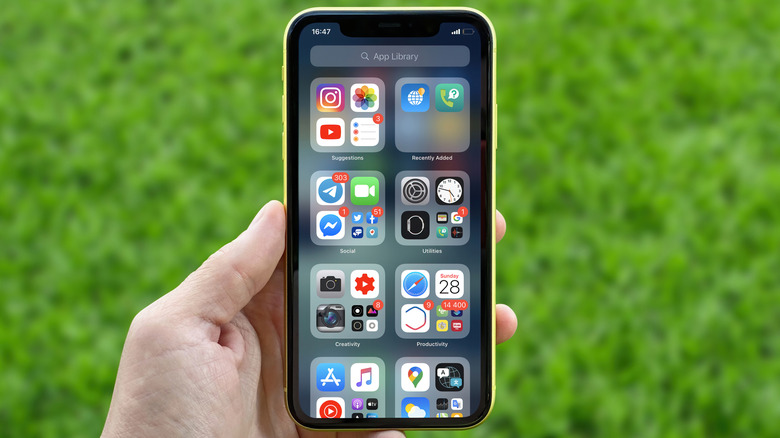
Sometimes, you don't want your iPhone or iPad to display all installed apps right on the Home screen. The simplest method is long-pressing an icon, tapping the - (minus) icon next to it and choosing Remove from Home Screen. This banishes it to the App Library, but you can go further.
Maybe you want to declutter your iPhone and keep the list tidy, keep getting distracted by social media or don't want others seeing what you have installed. In these cases, iOS and iPadOS give you several ways to hide apps to keep them out of your (and others') view. While these methods aren't secret agent-level tricks that hide in plain sight, they're suitable for keeping icons out of view and locking anything that needs extra security. In case a full lock and hide isn't right for you, you can still remove apps from your screen or suppress their content around your phone.
We focus on iPhone and Face ID for brevity, but this works the same way on iPad and models that have Touch ID.
The primary method for hiding iPhone apps
Mr.Mikla/Shutterstock
Prior to iOS 18, there was no official way to hide apps on iPhone or iPad; you had to stick one inside a folder to keep it out of view. Now, there's a better method. To hide an app, long-press it on your device's Home screen and choose Require Face ID. Doing so shows a new prompt that explains what happens upon locking. You have to authenticate with Face ID or your passcode to open it, notifications won't contain any details and its content won't show up in places like Spotlight searches or CarPlay.
It's a smart idea to lock financial tools for a second layer of security. You'll find lots of stories online of people being scammed by strangers who asked to use their phone in an "emergency." Once they have your phone in hand, it only takes seconds to transfer money to themselves using Venmo or similar. Even though you shouldn't hand your phone to a stranger in the first place, requiring re-authentication for the app prevents schemes like this.
Choosing Require Face ID keeps the icon where it is while requiring authentication every time you open it. Alternatively, pick Hide and Require Face ID to remove it from your Home screen and searches. After hiding an app, you'll get no notifications from it. You can't lock most default apps; this is limited to ones you've installed. And the status of what you've hidden doesn't sync to your other Apple devices.
Hidden apps live in a special folder, aptly called Hidden, at the bottom of the App Library. Swipe all the way to the rightmost page to see this. That Hidden folder appears blank no matter how many apps you have hidden (including zero). Tapping it requires you to authenticate before you can see what apps are inside, and then you'll need to verify again when opening one. To unhide something later, long-press on it in the Hidden folder, choose Don't Require Face ID, and the app will return to the top of the list after it verifies you. You can then search for it using Spotlight and drag it back to wherever you'd like.
Hidden apps aren't totally invisible
Cheng Xin/Getty Images
While this process greatly reduces an app's visual presence on your device, it doesn't erase all traces. Anyone with your passcode can browse the Hidden folder, as well as the same list under Settings > Apps > Hidden apps.
But there are other places where "hidden" apps can appear: Settings > Screen Time > See All App & Website Activity and Settings > Battery > View All Battery Usage. These show how long you've used each and how much battery it's consumed on your phone, respectively. Even if it's hidden, it will still show up in these spots if there's data to report.
Apps you download also show up in your App Store purchase history (even free ones, despite the name). To hide these, open the App Store, then tap your profile icon at the top right and choose Apps & Purchase History. If you're in a family group, tap Your Apps. Everything you've downloaded, including any not on your iPhone anymore, appears here. Swipe from right to left and choose Hide to remove an item from this list. If you change your mind later, go back to the top-level App Store menu, touch your name at the top, and choose Hidden Purchases. There, you can Unhide any to put them back in the list.
This method is more for decluttering than any form of privacy. You don't need to authenticate to view the Hidden Purchases list, plus your transaction history is also kept under Purchase History in the Apps & Purchase History menu. Hiding purchases prevents anyone in your family group from redownloading them, but it won't hide the apps themselves.
Other methods to keep apps under control
Tada Images/Shutterstock
Hiding apps isn't the only method of controlling what appears on your phone. As we've seen, it's a good way to spend less time on addictive software, since it adds additional steps for access and hides all notifications. But you can add more restrictions for these.
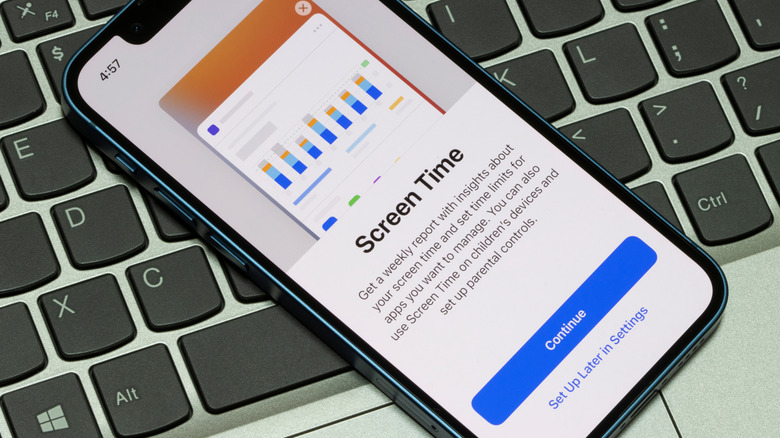
Head to Settings > Screen Time to set a daily time limit for chosen apps (App Limits) or set hours when you can't access them (Downtime). Also in this menu under Content & Privacy Restrictions > Allowed Apps & Features, you can disable access to some built-in tools (like FaceTime and Mail), which removes them from the Home screen. While many of these options are great for controlling a child's iPad, anyone can take advantage of them.
If an app is bothering you too much, go to Settings > Notifications, select the offender, and fine-tune its notifications so you aren't nagged. To make your iPhone stop suggesting an app, visit Settings > Apple Intelligence & Siri > Apps, choose one, then disable the sliders to stop your phone from suggesting it. And to remove an app from search, visit Settings > Search, select it and disable both sliders. Hiding an app does all of these, but you can take these actions without hiding if you want to keep it visible.
Hiding apps isn't 100 percent foolproof, but it adds more steps for people to see what you'd rather them not. Maybe you don't want others snooping around your phone when you hand it to them, or you want to add additional protection against someone trying to use your phone for nefarious purposes. For more protection, consider enabling Stolen Device Protection on your iPhone.