This week's science news.
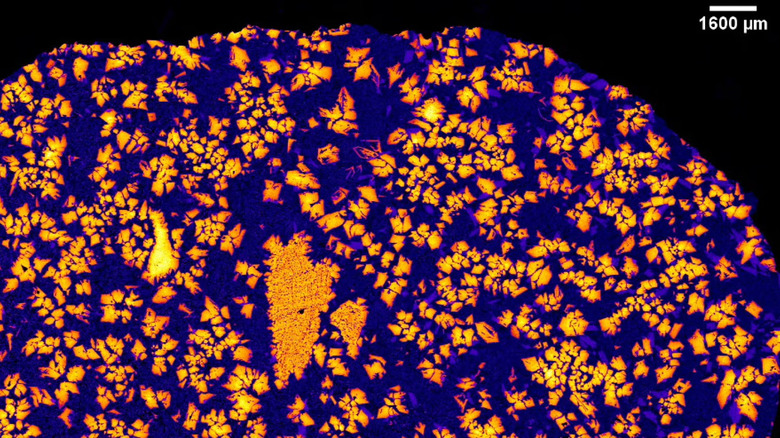
Aaron Bell/CU Boulder
It's been an eventful week in science news. Astronauts on the ISS were briefly ordered to shelter in place after the discovery of an air leak in the transfer tunnel, NASA officially declared its MAVEN space probe dead and scientists announced the creation of a "universal vaccine" designed by AI. Plus, researchers used the James Webb Space Telescope to directly measure the mass of a distant black hole and a meteorite revealed clues about a long-gone protoplanet in our solar system. Catch up here on these stories and more from this week.
JWST measures the mass of a faraway dormant black hole
Using data from the James Webb Space Telescope, researchers have measured the mass of a dormant black hole 10 billion light-years away. Dormant black holes are trickier to observe than those that are actively feeding, as they aren't surrounded by light from hot gas and dust encircling them as material is pulled in. But thanks to JWST's capabilities and gravitational lensing, or the phenomenon in which the gravity of a massive object such as a black hole warps the light passing around it, the team was able to measure the black hole at the center of MRG-M0138, a distant galaxy from the early universe.
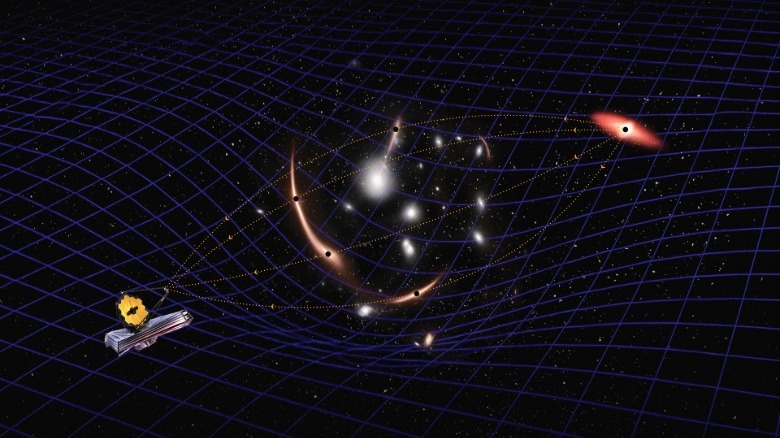 Navid Marvi/Carnegie Science
The technique boils down to "combining JWST's sharp vision with a natural magnifying glass," said lead author Andrew Newman, from Carnegie Science. "By combining JWST data with gravitational lensing, we could peer inside the black hole's sphere of influence, where its gravity boosts the speeds of stars," Newman said. "This is one of the best techniques we have to weigh a black hole, so we were excited to extend it to a much earlier period in cosmic history."
It's the farthest dormant black hole that astronomers have been able to directly measure to date, and the findings could help scientists better understand the formation of massive black holes and galaxies billions of years ago. The paper is published in the journal Science.
Evidence of a long lost world
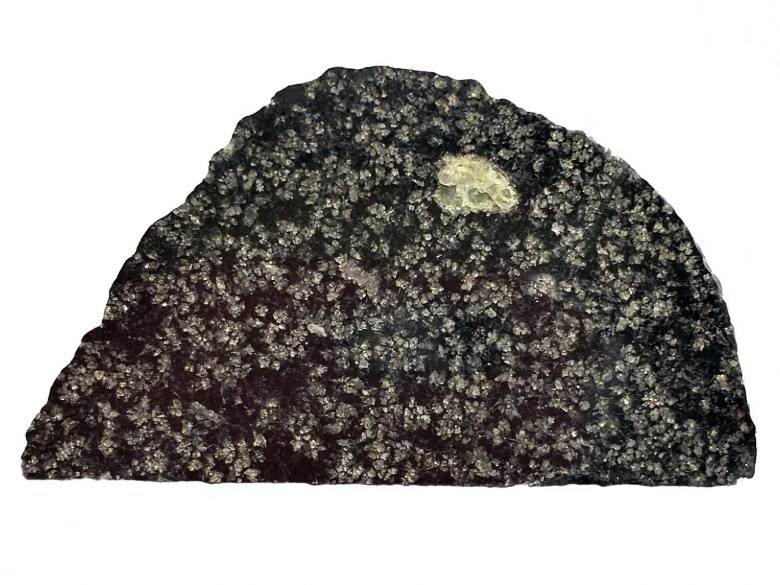
Scientists say a meteorite found in Africa's Sahara Desert holds evidence of a protoplanet that orbited our sun 4.5 billion years ago. The space rock they studied is a rare angrite meteorite, coming from volcanic rock that can be traced back to the first few million years of the solar system's existence.
"The materials that formed the angrite parent body are fundamentally different from the ingredients of Earth and Mars," said Aaron Bell, an assistant research professor at the University of Colorado Boulder. "It points to a distinct and separate evolutionary path in planetary formation in the early history of our solar system."
 John Kashuba
It's been thought that angrites are the products of asteroids due to how little silica they contain, compared to the makeup of Earth and other terrestrial planets where this compound is abundant. But in the meteorite dubbed NWA 12774, the researchers found an aluminum-rich mineral crystal, clinopyroxene, that they say indicates it formed under much greater pressure than an asteroid origin would allow for. The team says it needed at least 17.5 kilobars of pressure to form, and the patterns of the crystals inside the meteorite suggest it formed at a shallow depth rather than deep underground. For all of that to be possible, the parent body would need to be large — with a radius upwards of 1,118 miles.
According to the team, this object could have been about the size of the moon, or even as big as Mars. "We only know it existed because a few fragments of it happened to land on Earth," Bell said. "These meteorites preserved evidence of a completely different pathway through which early planets developed." The team's findings are published in the journal Earth and Planetary Science Letters.
Before you go, be sure to check out these stories too:
-
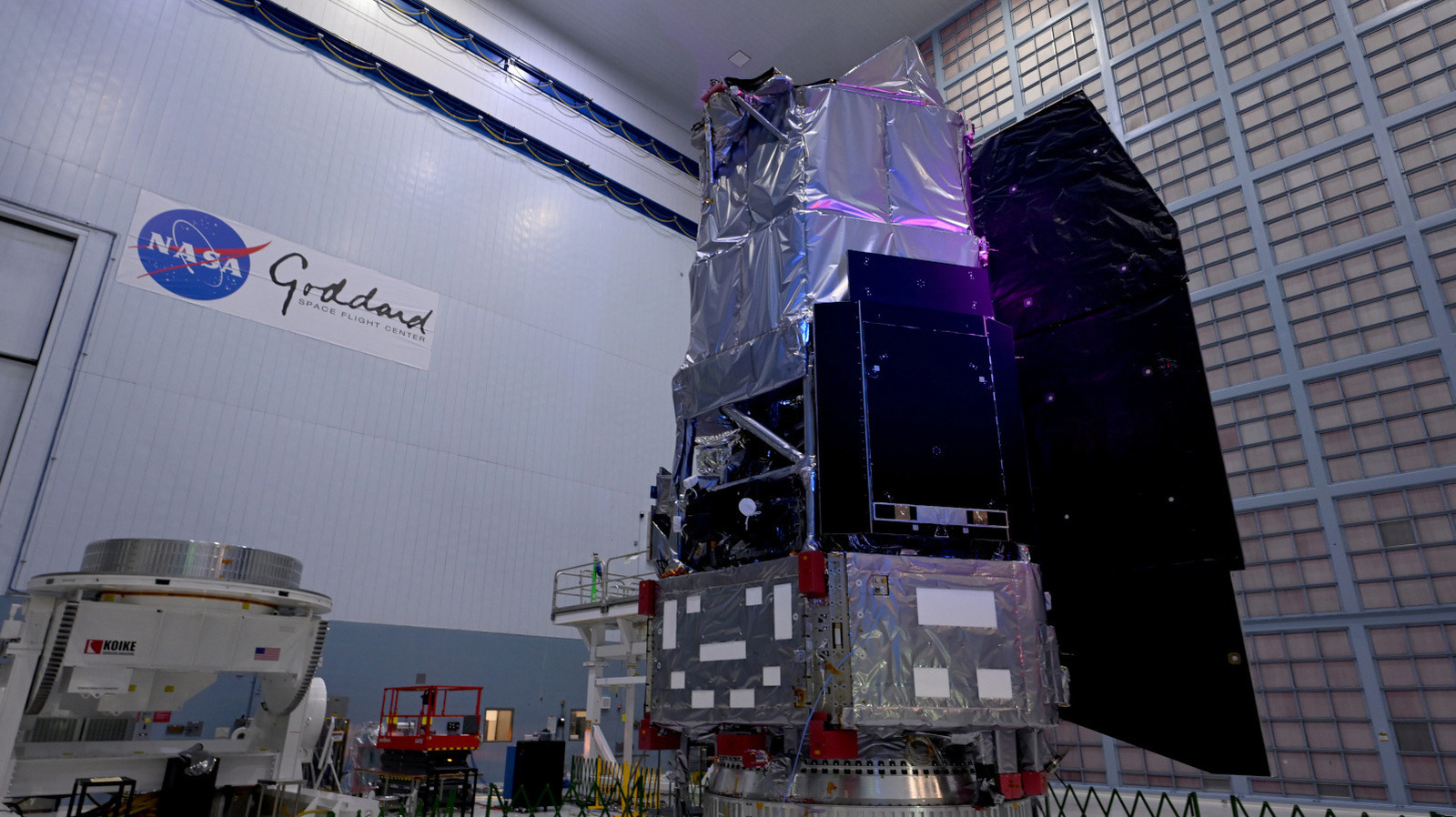
NASA's Nancy Grace Roman Space Telescope is set to launch on August 30
-
The University of Cambridge says it successfully tested a vaccine with an AI-designed antigen
-
Google pledges to replenish more water than it uses at data centers by 2030
-
Blue Origin CEO says New Glenn will fly again before the year ends