It's less about an autonomous vehicle's capabilities and more about what conditions it can operate in.
Karolis Kavolelis/Shutterstock
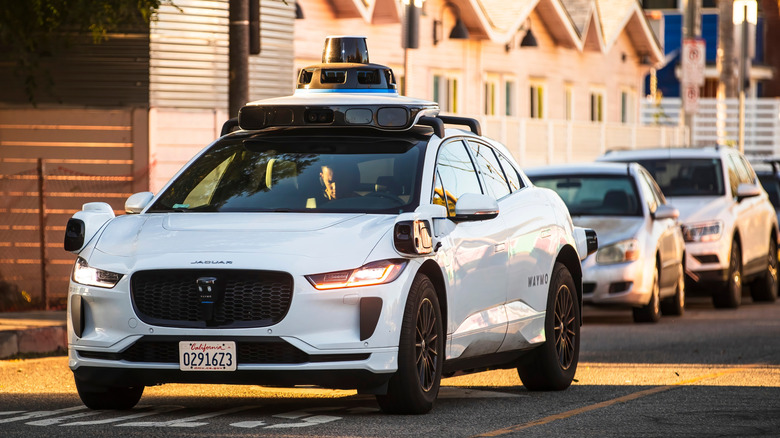
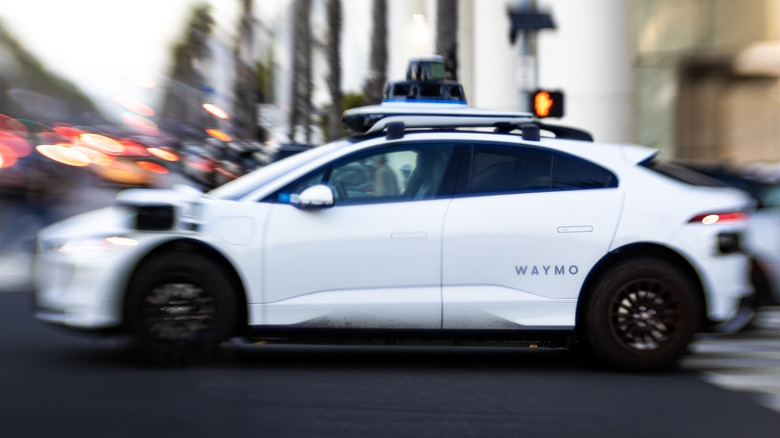
Seeing a car move through city traffic with no one in the driver's seat can make it feel like Waymo has already reached the highest possible level of automation. From a passenger's perspective, there's no steering, no monitoring and no need for a human to intervene. The vehicle handles the entire trip on its own.
But under SAE's (Society of Automotive Engineers) driving automation framework, that capability is still Level 4 rather than the highest: Level 5. The key distinction isn't how "independent" the driving looks in practice, but where that independence is allowed to exist. At Level 4, the system can fully handle the driving task without human input — within a defined set of conditions and locations. Level 5 removes those boundaries entirely.
Why Waymo is considered Level 4 automation
bluestork/Shutterstock
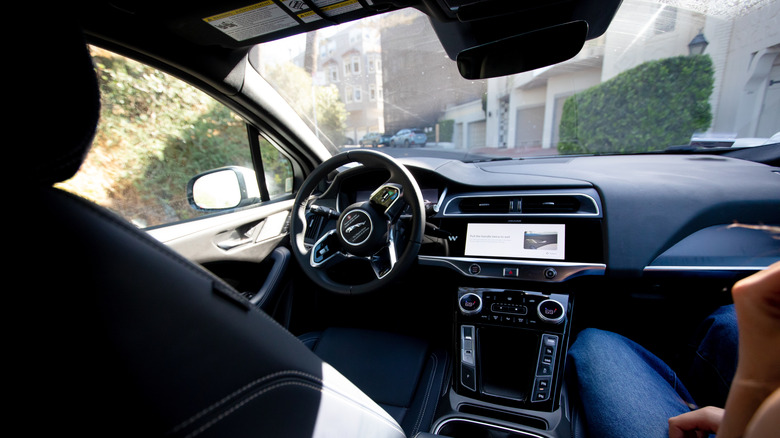
Strictly speaking, it's the Waymo Driver, the company's automated driving system, that's classified as Level 4. Waymo's published safety research describes it as an SAE Level 4 automated driving system, and that classification explains why an empty driver's seat doesn't automatically make a Waymo Level 5.
There are a total of six SAE automation levels, numbered 0 through 5. The National Highway Traffic Safety Administration (NHTSA) starts its breakdown at Level 0, where the human does all the driving even if safety systems can briefly intervene. Level 1 can continuously assist with steering or acceleration and braking, while Level 2 can handle both at the same time. In each case, the driver remains responsible for the car.
Level 3 changes who's doing the driving. The system can handle the entire driving task under certain conditions, but the human must be available to take over when requested. At Level 4, that requirement disappears. Once the automated system is operating within its intended conditions, the occupants are passengers rather than backup drivers.
This is also why Waymo can describe its service as fully autonomous without claiming SAE Level 5. Its cars can complete rides without anyone sitting behind the wheel, but that ability still has defined operating limits.
What separates Level 4 from Level 5 automation
Oselote/Shutterstock
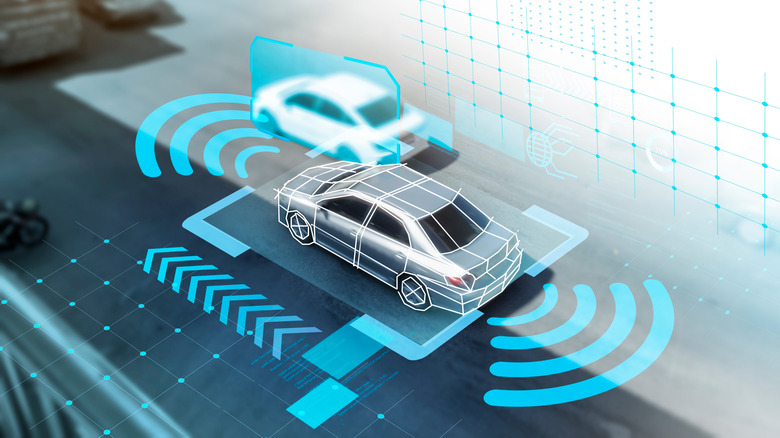
Those limits are usually described as an operational design domain, or ODD. In simple terms, the ODD defines where and under what conditions a self-driving system is designed to operate. That can include geography, the types of roads it's designed for and the weather conditions it can handle. SAE defines it as the set of conditions an automated driving system is designed for, and Level 4 systems are expected to handle driving on their own within those boundaries.
At Level 4, the system handles the entire driving task within its ODD. Level 5 removes that limitation: NHTSA describes it as operating universally rather than within limited service areas. So Level 5 isn't about a car being "more autonomous" during a particular maneuver. A Level 4 Waymo already handles steering, braking and decision-making on its own when operating within its domain. The difference is scope, not who is responsible for driving.
That's why Waymo can keep improving its system and still remain Level 4. For example, Waymo says its sixth-generation Driver has expanded capabilities for more diverse environments, including extreme winter weather. Expanding into new cities or weather types makes the system more capable, but as long as it still operates within defined boundaries, it remains Level 4 rather than Level 5.
Why getting to Level 5 is much harder than expanding Level 4
Ward Dewitt/Getty Images
Expanding a Level 4 system gives developers boundaries around the problem. They can define where the system should operate, identify the conditions it needs to handle and test its behavior against scenarios relevant to that domain. Removing those boundaries dramatically increases what has to be accounted for.
That's already difficult at Level 4. In its 2026 research on collision-avoidance testing, Waymo noted that evaluating a Level 4 system is complicated by the potentially enormous number of operational scenarios in which a hazardous situation might develop. Its methodology identifies potentially hazardous scenarios using human driving data, data from Waymo's automated-driving tests and expert knowledge.
Weather offers a concrete example of those limits. In May 2026, Waymos encountered flooded roads in Atlanta and San Antonio, leading the company to suspend or restrict some operations while it worked on improvements.
There isn't a reliable countdown to when Level 5 will arrive. NHTSA currently says Level 5 technology isn't available in vehicles for consumer purchase, and the SAE levels describe capabilities rather than a development roadmap.