They're faster but much more expensive than previous generations.
Apple
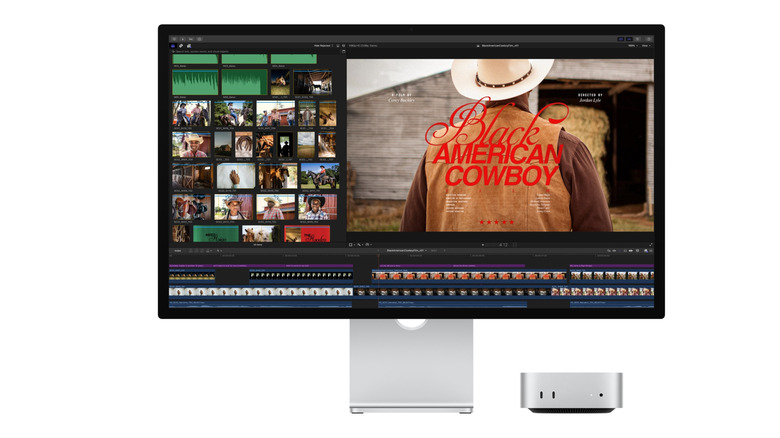
Apple hasn't forgotten about the Mac mini, after all. The company's popular diminutive desktop is getting refreshed today with a brand new M6 chip, while the Mac Studio is getting bumped up to the M5 Max and new M5 Ultra chips. Curiously, the Mac mini didn't get an upgrade to the M5 chip last year, but you'll be able to upgrade the newer model to an M5 Pro if you need more power. Pricing, unfortunately, has gotten worse since Apple's latest hikes: The Mac mini now starts at $899 with the M6 chip ($100 more than before, with a meager 256GB of storage), while the Mac Studio starts at $2,499 with M5 Max. The Mac Studio with an M5 Ultra will run you at least $5,499.
Over the last few years, AI aficionados have been buying up Mac minis en masse to run local models and AI assistants. With the M6 chip, Apple's first 2-nanometer design, the company seems to be making the Mac mini an even better AI workhorse for hobbyists. It's a 12-core chip, powered by two super cores, four performance cores and six efficiency cores. In comparison, the M5 was a 9 or 10-core offering with up to four super and six efficiency cores. The M6 also sports a Dual 16-core Neural Engine, making for a total of 32 Neural Engine cores with double the AI processing power of the M5, according to Apple.
Building on the strong graphics performance of the M5 chip, the M6 features a 12-core GPU with neural accelerators in every core. Those neural accelerators originally made their debut with the M5, but this is the first time they're available on the Mac mini. Apple claims the new GPU configuration is up to four times faster for AI processing and twice as fast for gaming compared to the M4 Mac mini.
If you need more power than the M6, you can also configure the Mac mini with an M5 Pro for $1,699. That's the same chip we've already seen on the latest MacBook Pro, with up to an 18-core CPU and 20-core GPU. As before, it supports up to 64GB of RAM with a 307 GB/s of memory bandwidth, while the M6 maxes out with 32GB of RAM with 170 GB/s bandwidth. You'll also only find rear Thunderbolt 5 USB-C ports on the M5 Pro mini, the M6 model just has Thunderbolt 4. Given the price jump, the M5 Pro Mac mini is clearly meant for a more demanding audience–the sort of people who needs pro-grade performance, but can't justify the jump to the $2,499 Mac Studio.
While nothing has changed with the Mac mini design-wise, it remains the best-looking mini-desktop on the market with its ridiculously small aluminum case. The new model also packs in some nifty standard upgrades, like Wi-Fi 7 and 2.5 Gbps Ethernet. Overall, the updated Mac mini looks like a solid upgrade for anyone running the M1 or M2 models, but you probably don't need to throw out any M4 systems just yet. It's just a shame that thanks to the AI RAMaggedon, it's now starting at $899, $300 more than earlier Mac mini systems. (Come on Apple, at least upgrade the base storage to 512GB!)
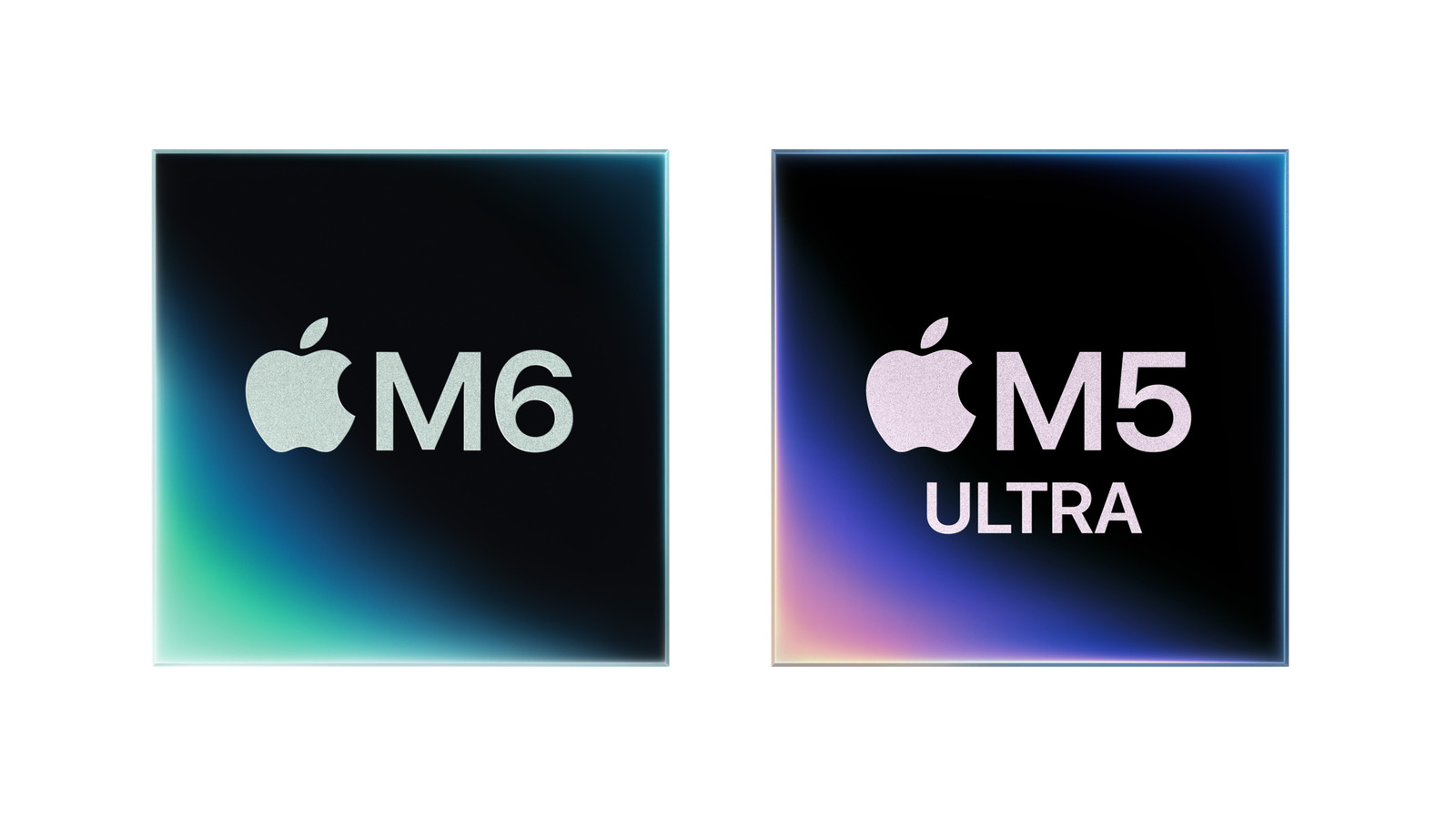
The new Mac Studio is similarly unchanged, style-wise, but the M5 Max and M5 Ultra mark a new level of performance for professional users. We've already seen the M5 Max in the MacBook Pro–the M5 Ultra is another beast entirely. Much like previous "Ultra" chips, it's essentially two Max chips stuck together. But in this case, it's two M5 Max chips joined with the company's 4.4 TB/s "UltraFusion" connectivity layer, creating Apple's first-ever quad-die chip.
The M5 Ultra can be configured with up to 36 CPU cores (12 super, 24 performance), delivering up to 25 percent faster single-threaded speeds than the M3 Ultra and 30 percent faster multi-threaded speeds, according to Apple. It can also be equipped with up to 80 (!) GPU cores, which offers up to 40 percent faster graphics than the M3 Ultra and a whopping 4.5X faster AI compute. It's no wonder the M5 Ultra Mac Studio starts at $5,499 — it's meant more for the likes of Pixar, not typical creatives.
On top of faster CPUs, the new Mac Studio also offers up to double the storage speeds of the previous generation, thanks to its next-gen PCIe Gen 6 SSDs. It also has two Thunderbolt 5 ports for accessory expansion, and it can support up to four Apple Studio Display XDR monitors running at 5K/120Hz.
We'll have to put these systems through their paces to see if Apple's performance claims are true, naturally. It's just unfortunate that the RAMaggedon is making both the Mac mini and Mac Studio more inaccessible for regular users. The Mac mini used to be one of the best deals in computing at $599. Now it's a much more serious investment, and it also feels like a bit of a rip-off with just 256GB of storage.