You can watch your region's sports or news without paying an arm and a leg. Really.
Skynesher/Getty Images
Cutting the cord isn't as easy, or as cheap, as it looks. With streamers seemingly engaged in OPEC-style price gouging, many viewers' television subscription costs are mirroring cable bills. Moreover, many viewers don't even get the oft-touted benefit of an ad-free experience, with streamers forcing consumers to choose between ad-supported budget subscriptions and costly premium-tier options.
For some old enough to remember a world before the streaming era, one of the great delights of the cable experience was the lost art of channel surfing. And while it's difficult to quantify the content-high of flipping through an endless Rolodex of local content in a single, unhinged sitting, users can utilize a variety of pathways to access local news, sports and entertainment programs. And while many viewers are aware that platforms like Hulu and YouTube TV offer live streaming, it can be difficult to know where to access local broadcasts for free.
Today, cord-cutters have more options than ever to access free local programming without a costly cable subscription. With digital over-the-air broadcasts, free streaming platforms and local news aggregators at your disposal, it is easy to find options that fit your budget, lifestyle and television setup. So if you are looking to maximize your cord-cutting experience, consider this your guide through the perilous valleys of cableless television.
Taking advantage of digital television programming
Len_fernandes/Getty Images
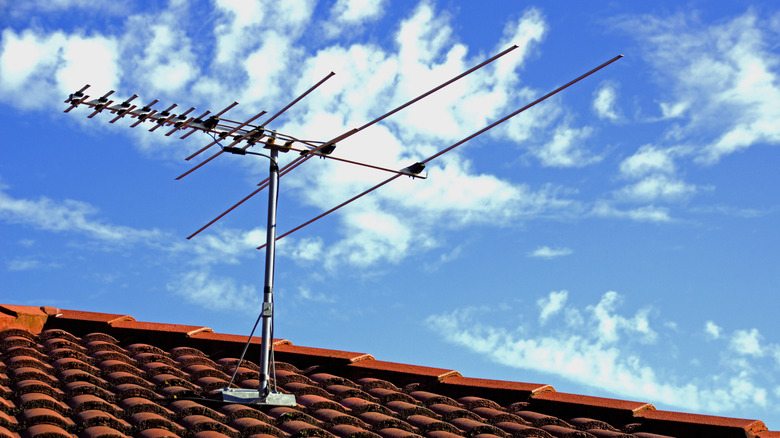
The most tried-and-true means of watching free programming is tapping into your local over-the-air (OTA) television broadcasts. As it stands, the FCC requires all televisions to be equipped for OTA inputs, meaning customers can easily access local broadcasts simply by purchasing and installing an antenna. With indoor antennas costing as little as $15 and long-range outdoor systems charging substantially less than a cable subscription, viewers can easily view local programming on a budget.
Over-the-air (OTA) broadcasts harken back to the 1940s, when families would gather around a television set with an antenna picking up Ultra High-Frequency and Very High-Frequency waves. And cable television boomed in the two decades later, as stations continued to maintain these analog broadcasts. By the late 1990s, OTA programs began a decade-and-a-half-long transition to digital, which viewers picked up via antennas and built-in digital tuners. As it stands, the FCC requires every television sold after March 2007 to include a digital tuner.
Today, local news, sports, special interest and emergency broadcasts continue to use these frequencies. However, just because these broadcasts are free doesn't mean that you'll lose out on visual quality. With most broadcasts available in HDTV, OTA television is a fantastic option if you are trying to remain plugged into your local programming without paying exorbitant cable fees.
Understandably, installing an antenna can be a major hurdle for some viewers. Although not as difficult as it sounds, it will require some research. As a rule, rural users are advised to opt for an outdoor antenna, as their extended range will greatly expand their access to broadcasts. Metropolitan viewers, on the other hand, can probably get the same results with a cheaper indoor antenna. Other considerations, like local land formations, can affect the quality of your signal. With that said, installing your antenna can be easier than you anticipate, especially if you opt for an indoor option. For instance, Roku televisions provide a step-by-step, on-screen guide for starting your OTA viewing experience.
Once installed, point your antenna toward the closest transmitter to maximize your reception. To find your local transmitter, you can visit Antenna Direct's transmitter locator tool to find the TV transmitters in your area. Multidirectional antennas, meanwhile, trade range for directional flexibility and are ideal for urban users within a reasonable distance of a transmitter. Once installed, users can scan available channels via their television set or converter box, depending on their setup.
To see what digital television programs are available in your area, you can visit the Federal Communications Commission's DTV Reception Map database. To use the search tool, simply type your address, ZIP code or city into the search bar, and you will receive a list of available channels. It also pulls up additional information, such as the programming's callsign, network, RF channel number, band and signal strength.
NextGenTV takes OTA viewing experience to the next level
Yuganov Konstantin/Shutterstock
Although over-the-air broadcasts have been around forever, a new technology is promising to modernize viewers' OTA experience. Known as NextGen TV, or ATSC 3.0, this new technical standard created by the Advanced Television Systems Committee, the consortium of manufacturers and broadcasters responsible for ushering in modern HDTV technical standards, promises higher quality, advanced features and expanded content.
Essentially, the new standard adds internet protocols to these broadcast signals. In addition to increasing reception, it promises to enhance broadcasts with multicast signals, pause and restart functionalities, enhanced audio, 4K HDR quality with deeper color palettes and faster frame rates. It will also likely expand antenna users' viewing options, adding both on-demand and internet protocol-carried content. And while bandwidth constraints slowed its early rollout, most large networks have adopted the technology.
The transition to ASC 3.0 has been mixed. While large broadcasters have moved toward adopting the new standard, consumers have been less bullish on the transition. If you're looking to beam these enhanced broadcasts into your older set, it is best to confirm your television is compatible with ATSC 3.0. If not, you will need to add an adapter to your antenna, which can cost up to $200. As it stands, the FCC is considering regulations to push broadcasters and viewers to this new format, so it may behoove you to prepare accordingly.
It's all about the apps
Now, let's dive into which apps on your smart TV can broadcast free local content. Many local programs can be viewed through their affiliate station's free streaming applications. Fox, for instance, lets viewers watch their local coverage for free on its Fox Local application, while CBS offers select television episodes without a cable subscription. For the most part, viewers can download these applications onto their smart television or streaming device, including Apple TV, Roku and Fire TV. However, most will require a cable subscription to watch live content.
Another option is Tubi, which became the unofficial king of free television after it streamed the 2025 Super Bowl. Owned by Fox, Tubi's free, ad-supported programming has steadily grown into a staple of many cord-cutters' daily viewing diets, offering 260 live television channels to go along with a plethora of films. In addition to its global news and sports offerings, Tubi gives viewers access to 107 local news broadcasts, ranging from large cities like Houston and Los Angeles to smaller markets like Corpus Christi, Texas and Manchester, New Hampshire.
For Roku owners, the Roku channel offers over 500 free Live TV channels. In addition to local news and niche programming, Roku allows viewers to watch everything from standout series like Law and Order to local sports and a 24/7 feed of classic Westerns. The company also encourages its users to link its live programming with local OTA broadcasts via an HDTV antenna, making Roku an ideal way to cut your costly cable package.
PlutoTV is another popular free streaming service that doesn't require a subscription. Sporting hundreds of free channels and thousands of movies, it's grown into a popular streaming option for cord-cutters. To access local content, viewers should visit the Local News section of the streamer's live TV page. Unfortunately, Pluto's local news coverage is largely limited to larger cities, but can still serve as a useful piece of a broader non-cable television package. As it stands, PlutoTV's streaming app is available on most smart TVs and a variety of streaming devices, including Apple TV, Chromecast, FireTV, PlayStation, Roku, TiVo, Xbox and Xfinity, as well as Android and iOS devices.
Filling the local news gap
One of the most difficult parts of cutting the cord is bridging the live TV gap, as several sports leagues, news stations and live television programs are hidden behind costly cable or streaming subscriptions. And while some are available via the OTA broadcasts mentioned above, viewers who don't want to spend extra for hardware and installation may feel cut off from their local community's content. Luckily, those who have replaced their cable subscriptions with streaming services can still access local news stations via a host of news aggregators and streaming apps.
One popular local news aggregator is Zeam, whose local forward approach to streaming provides viewers free access to their area's television productions, as well as original content. With a mission statement that aims "to deliver life in real time, no matter where you are, where you're from, or where you're going," Zeam provides its subscribers free access to local news, sports, weather, arts and entertainment channels. And even though the company shamelessly deploys the cringe-inducing moniker of Zeamers, enduring the nickname is a worthy price to pay for roughly 27 million hours of free local content a year. In addition to Zeam's website, viewers can watch live local broadcasts on both iOS and Android mobile platforms, as well as connected television applications via Apple TV, Fire TV, Roku and LG.
Another pillar of the free news charcuterie board is NewsON, which Zeam happened to acquire from the Sinclair group in August of last year. Hosting roughly 295 stations across 150 markets, NewsOn touts itself as the largest collection of free local news broadcasts anywhere. According to the streamer, this amounts to a whopping 91% coverage of American communities. The free streaming platform gives viewers access to local news broadcasts from ABC, NBC, CBS and Fox affiliates. To check if your favorite broadcast team is available on the application, visit NewsOn's channel list. Available on smart televisions from the likes of Samsung and Vizio, iOS and Android devices, Roku, Amazon Fire TV, and Apple TV, the application and website also offer archived newscasts, special clips and other offerings.
If none of these options fit your fancy, several other streamers offer access to local news. Haystack News, for instance, offers roughly 400 global and local channels, as well as customizable headline aggregators based on your personal interests. Other streaming options, including Stirr and Amazon's News app on FireTV, provide comprehensive local news coverage. On balance, slashing your cable bill doesn't mean you need to be cut off from your local community. With a wealth of options at your disposal, local broadcasts are only a few clicks away.