Your phone can be the safest place to keep your credit cards.
DenPhotos/Shutterstock
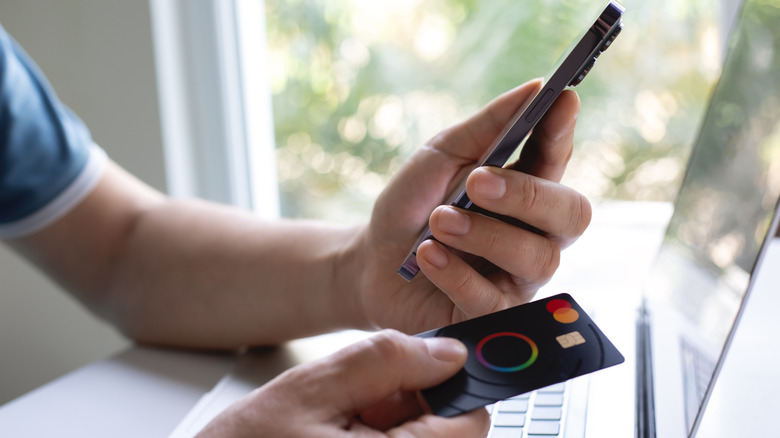
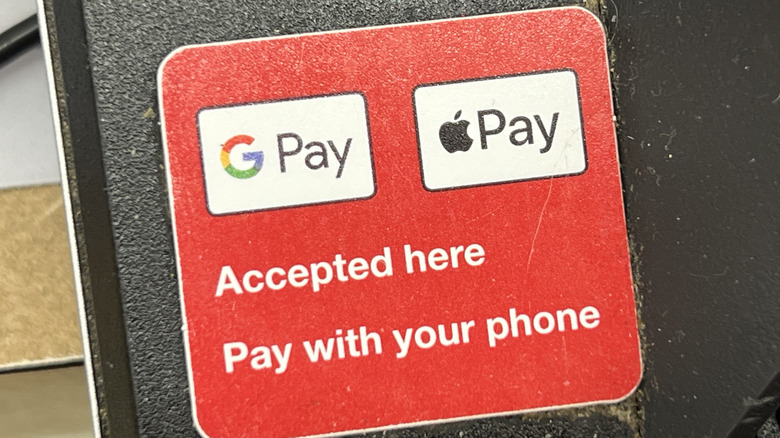
Digital payment tools like Apple Wallet and Google Wallet make life so much easier. In many cases, you don't have to worry about grabbing your actual wallet before leaving the house, since you can pay for whatever you need with your phone or smartwatch.
But digital wallets and payment services have another benefit you might not have considered: security. They are packed with security features, including biometrics, tokenization and remote deactivation. These all make it much harder for someone else to use your cards. Even if your phone is stolen or lost, your payment methods are likely to be safe.
The security mechanisms behind digital wallets
JulieK2/Shutterstock
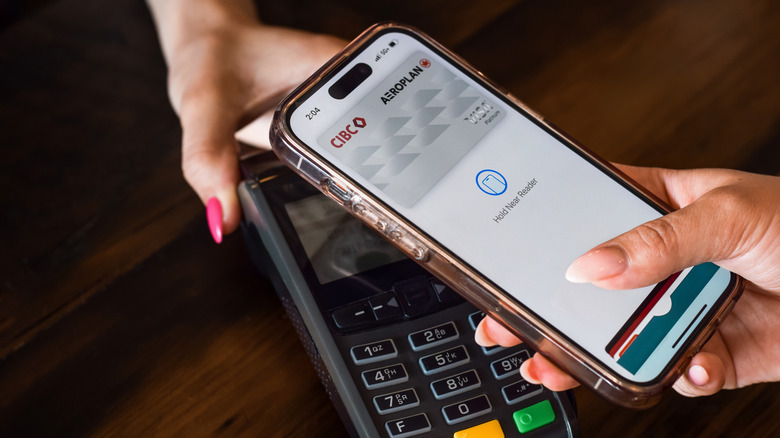
Setting up most digital wallets requires you to have authentication enabled for your device. On an iPhone, for example, you must have a lock screen passcode enabled before setting up Apple Pay. This is mandatory, as is confirming every transaction with the same security you use for your lock screen. Using Face ID or Touch ID is even more convenient, with your passcode only acting as a fallback in most cases.
Even the Apple Watch, which lacks a biometric sensor for authentication, must have its own PIN configured to use Apple Pay. Once you put it on your wrist and enter your PIN, it's ready for Apple Pay until you take it off, after which the passcode is required again. Unless your passcode is incredibly weak, the risk of someone using your cards without you knowing is nearly zero. That's in comparison to most regular cards, which often don't require any authentication for small purchases.
Digital wallets also greatly reduce the chance of you falling victim to card skimmers (malicious devices that steal your card details by attaching to legitimate scanners), since you don't have to insert a card. Fake touchpoints for digital payments are a possible threat, but aren't common in practice.
Importantly, digital wallets use tokenization. This means payments don't use your actual card number; the wallet instead stores a unique number for that card, so the merchant never sees your card's real details. Each transaction happens through a one-time code that's useless for anything else if it's stolen. This combination makes it very unlikely that your digital cards could ever be used by someone else.
Another vital feature is being able to take action if you lose your phone or it falls into the wrong hands. Services like Google's Find Hub or Apple's Find My help you find your lost device (even when it's off, in some cases) and can wipe your digital wallet data if needed. This only disables the digital copies of the cards on your phone, so you won't have to waste time calling your bank to cancel your cards and waiting on new ones.
Digital wallets make life more convenient, too
Smith Collection/gado/Getty Images
Now, modern physical cards aren't wildly insecure. When you use the chip reader or tap-to-pay, the same tokenization protects your real card number through a one-time code instead of transmitting the real card details. However, with digital wallets, there's no temptation to fall back to the (less secure) magnetic stripe reader if a store doesn't take chip cards or those more secure methods fail.
Beyond that, digital wallets have the added benefit of convenience. Using one means you can leave your cards — and in many cases even physical documents like ID — at home. If you use different cards for various rewards, you don't have to stuff them all in one wallet. And there's no risk of losing them or having them stolen.
If you haven't already set up the digital wallet on your phone, it's worth adding at least one card. Mobile payments are accepted in tons of stores, plus you can use the cards in your digital wallet for payments in apps and online.