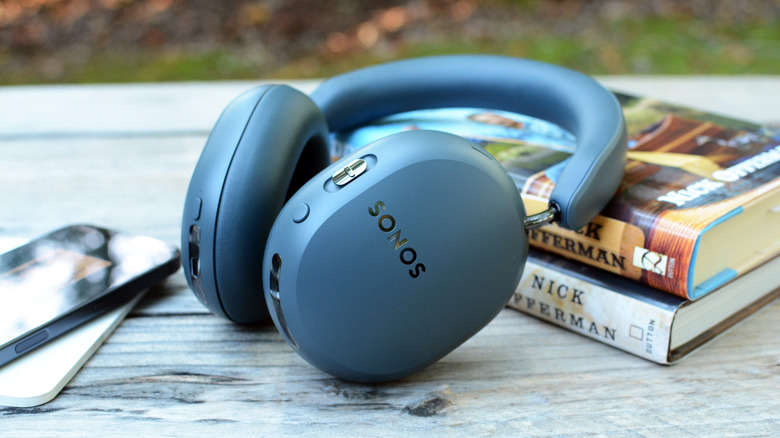
The company’s new headphones can truly be part of a Sonos system.
Billy Steele for Engadget
RATING : 8.7 / 10
- Upgraded sound and ANC performance
- Connects directly to your Sonos setup
- Same price the regular Ace was at launch
- Pricey
- Residual app anxiety
- Best features require additional Sonos gear
We may receive a commission on purchases made from links.
To say the Sonos Ace had a rough launch is a massive understatement. The company's first headphones should've been a milestone moment, but instead the product debut was overshadowed by the infamous app crisis of 2024. After years of work, and one CEO resignation, Sonos has returned with an overhauled speaker platform and two new Ultra devices. One of those is a follow-up to the original headphones: the Ace Ultra ($449).
There are the expected upgrades to things like sound quality and active noise cancellation (ANC), but the biggest addition here is a feature that probably should've been available on the original. Thanks to new tech inside, these headphones feel more like a full-fledged member of a Sonos system. In addition to the company's handy TV Audio Swap from the original model, you can link the headphones via Wi-Fi and send music to and from the company's S2-compatible speakers. Thankfully, the tool already works well — even in its early form.
What's new on the Sonos Ace Ultra?
Billy Steele for Engadget
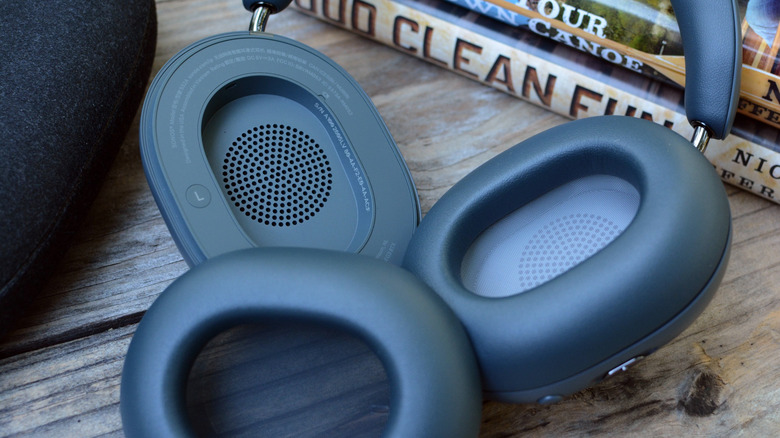
Aside from two new colors (hello, Agave!), the overall design of the Ace Ultra hasn't changed much from its predecessor. These new headphones are slightly larger and just a hair heavier than the original Ace. There are subtle differences in the design accents, but it's hardly a major aesthetic refresh. Almost all of the updates are internal, and there are a lot of them.
Under the hood, the Ace Ultra headphones run on Sonos' Headphone Engine 2, which is part of the company's larger Sonos 27 platform overhaul. This brings a redesigned Wi-Fi setup that allows for what the company calls "headphone linking," in addition to the TV Audio Swap from soundbars on the previous Ace. Headphone linking allows you to add the Ace Ultra to your collection of Sonos devices just like you would a speaker. You're then able to send whatever is playing on the speakers — music, movies or even audio from a connected turntable — to the headphones with the press of a button. Press again, and the audio returns to the original device.
There are, of course, some caveats with this functionality. The first, and probably most notable, is that you have to initiate your music or podcasts from the Sonos app. This audio move won't work if you're using Apple Music over AirPlay, for example. You can, however, start playing the content in the Sonos app on the Ace Ultra headphones, selecting them just like you would a speaker. You don't have to first play the audio through a speaker before sending it to the headphones.
For active noise cancellation, Sonos added two more microphones, so the Ace Ultra has 10 total. These help with the new Adaptive ANC that monitors your surroundings and adjusts the noise blocking in real time. There's also a new Adaptive EQ that automatically tweaks the sound based on changes in fit. This will be handy for people with glasses or long hair. On an EQ-related note, Sonos expanded the customization options there, so you can now dial in the tuning on the Ace Ultra with either a basic 3-band or more advanced 8-band EQ.
The last big upgrade is battery life. You'll get up to 35 hours total on a charge on the Ace Ultra, which is about five more hours than the original Ace. What's more, the company made the battery in these headphones user-replaceable, and you can already preorder that kit for $25 (not that you'd need it any time soon). Plus, the app also now shows an estimate of how long the battery will last, alongside its percentage.
During my testing, this figure varied based on how I was using the headphones, so employing features like TV Audio Swap affected the number more than streaming music from your phone over Bluetooth. So, TBD on if that estimate will be helpful or if it's more window dressing. I can, however, tell you that the overall battery life claims are holding strong: After 19 hours of tests with ANC on almost the entire time, I still have 45 percent left in the tank.
Audio and ANC performance
Billy Steele for Engadget
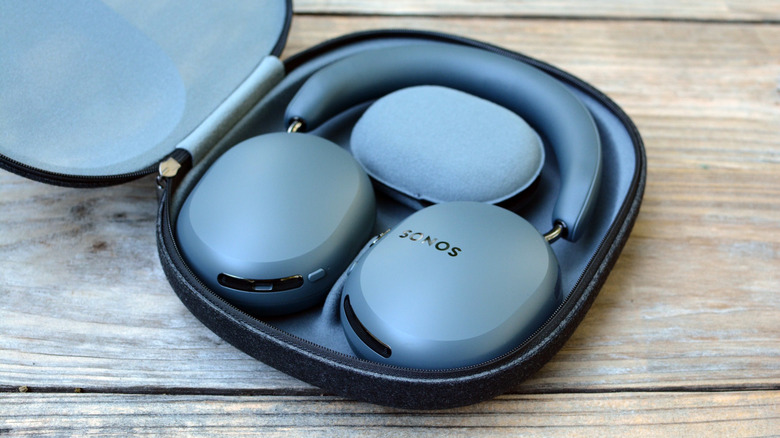
The Ace Ultra contains Sonos-designed 40mm drivers that the company says it tuned in collaboration with Grammy and Oscar-winning sound engineers. The result, according to Sonos, is "deeper bass, finer detail and zero distortion." In practice, that promise holds true. I noticed an obvious difference from the original Ace in terms of both bass quality and subtle details, even with older recordings like Every Time I Die's 2003 masterpiece Hot Damn! (RIP Andy Williams). The songs are immersive, with a punchy kick drum and pleasantly layered guitars — both of which are qualities that aren't apparent on some other headphones. The snappy bass drum enhances every beat of Honey Revenge's pop-punk bop Loving and Losing, too.
The audio improvements extend to the living room as well. Even before I set up Sonos' TrueCinema, the feature that takes into account the acoustics of the room while tuning the headphones, I could tell the Ace Ultra was more adept than its predecessor at things like emphasizing dialogue and picking up audio subtleties. In episodes of For All Mankind, for instance, I can hear the acoustics of the control room and how they impact each actor's voice. I noticed more texture on the staticky Apollo radio transmissions than I typically do with a soundbar. Overall, there's just more nuance and spatial quality to TV sound than on most headphones or a soundbar alone.
Sonos also touts up to twice the ANC performance compared to the original Ace headphones. I don't have the tools to measure this, but I can tell you the noise cancellation is better on the Ace Ultra. This new model does well with constant noise sources, which in my case were a loud clothes dryer, a raucous HVAC system and a noisy exhaust fan. The Ace Ultra doesn't block human voices or TV dialogue to the same degree, so when your music or podcast is paused, you'll hear a chatty neighbor or your kid's episode of Bluey.
A byproduct of ANC on headphones is transparency mode — or Aware mode as Sonos calls it. The Ace Ultra offers the most natural-sounding ambient mode I've experienced on over-ear headphones. I'd argue it even rivals the AirPods Max 2, a feat that none of Apple's competitors has achieved. Aware mode allows you to tune into your surroundings unencumbered, as if you're not wearing the Ace Ultra at all. What's more, Sonos also has a Sidetone feature that lets you hear yourself on calls, even when ANC is enabled. Sadly, it doesn't work as well as using Aware mode.
Speaking of call quality, the Ace Ultra has above average voice pickup; I noticed I sounded better than I typically do on headphones and earbuds. It's not the absolute best, but it's also perfectly usable. These headphones don't completely eliminate the background noise on your end, only reducing it enough to where it's not distracting for the person on the other end. Of course, the trade-off here is you don't sound overly processed in loud environments, which is a typical problem when headphones totally tune out any ambient roar.
A better living room companion
Billy Steele for Engadget
The main attraction on the Ace Ultra is the ability to send audio from a Sonos speaker or soundbar to and from the headphones, or for the headphones to essentially act as a standalone member of your Sonos setup. I've already discussed how this works, but let's chat about the overall experience a bit.
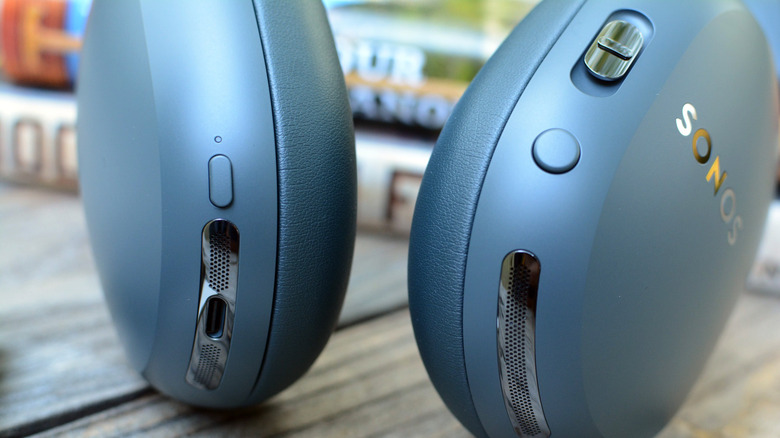
TV Audio swap works just as well as it did on the original Ace. Start playing a movie or show on your TV and you can send the sound to the Ace Ultra with a long press on the multi-function Content Key (located on the edge of the right ear cup). The transfer doesn't happen instantly; it takes a second or two. However, the switch works reliably in both directions, and you'll hear a tone in the headphones to let you know the action is complete.
I did notice one hiccup with TV Audio Swap once the sound was beamed to the Ace Ultra though. There are occasional cuts or skips in the sound, which can pull you out of an intense scene — like when Houston is trying to determine if Apollo 11 crashed on the moon (For All Mankind). My colleague Nathan Ingraham wasn't able to replicate the issue, and reported that TV Audio Swap worked perfectly for him. I suspect this can be fixed in a future Sonos 27 update, if it is an actual problem and not something happening with my home theater setup. I'm still doing some more tests, but Sonos told me the issue is more likely with my streaming devices or Wi-Fi network. Still, the company is aware it can happen, and you should be too.
The new headphone linking feature will also serve you well on the Ace Ultra. I had no trouble starting music on a speaker and moving it to the headphones and vice versa. I didn't notice the same skips as TV Audio Swap, which could be due to the fact that the Ace Ultra acts as a standalone member of a Sonos setup in this instance. With TV Audio Swap, you're sending the sound from a soundbar rather than the headphones functioning as their own direct device.
The competition
Billy Steele for Engadget
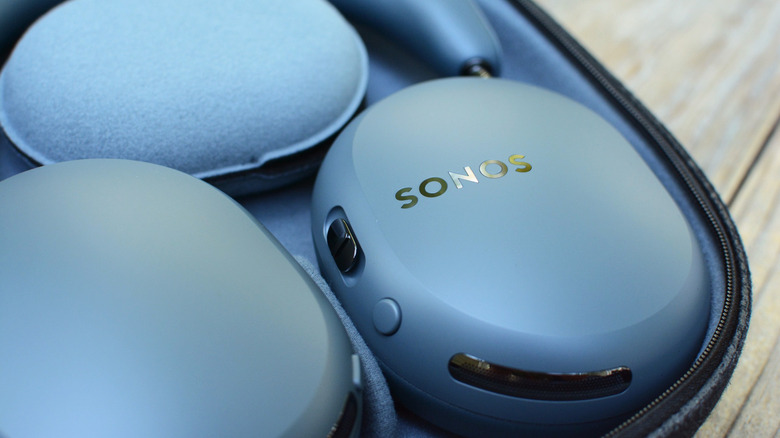
A major advantage for Sonos and its Ace headphones is minimal competition. There aren't many alternatives if you're looking for headphones that have living room features for private home theater use. Bose is the closest competitor as its headphones have a SimpleSync feature that connects to a compatible soundbar for private listening. Bose also offers a Cinema Mode that spatializes audio, widening the soundstage while also centering and clarifying the dialogue in the mix.
Of course, like Sonos, being able to use this Bose feature requires you to purchase both compatible headphones and a soundbar from the same company.
Wrap-up
The Ace Ultra is what the original Ace should've been two years ago. Specifically, Sonos' first headphones should've offered the ability to be part of a speaker system like this model does, instead of simply swapping the audio with a compatible soundbar. Maybe the technology wasn't there yet. Maybe the company already knew adding headphones to its app was going to be a heavy lift. In either case, I'd argue we could've waited for a set of headphones that truly felt like a Sonos product.
The Ace Ultra fulfills that promise. Aside from the headphone linking, improvements to audio quality, ANC performance and battery life also make this a worthwhile update to the company's original headphone formula. With the combination of Headphone Engine 2 and the Sonos 27 platform, it seems like Sonos has recovered from a disastrous 2024. The upgrades that are currently in early access already seem solid, which seems like a feat for this company.