The anti-truck is poised to deliver on all of its promises.
Properly evaluating a car is complicated business. I usually like at least a full day, and ideally a full week, to test out something new before making any conclusions because there's a lot to evaluate. There's the usual stuff like acceleration, handling and ride quality of course, but properly testing the software experience alone has lately become a huge task in and of itself.
I don't mind saying I didn't get anywhere near a full day behind the wheel of the Slate Truck, only a little more than an hour as a matter of fact. More time would have been better, but given how bare-bones the thing is, that actually felt like enough to get a good impression of whether this cut-rate, utility-focused, DIY-minded truck lives up to its promise.
It's still a little rough around the edges, but it's already got me thinking about the potential.
What is it?
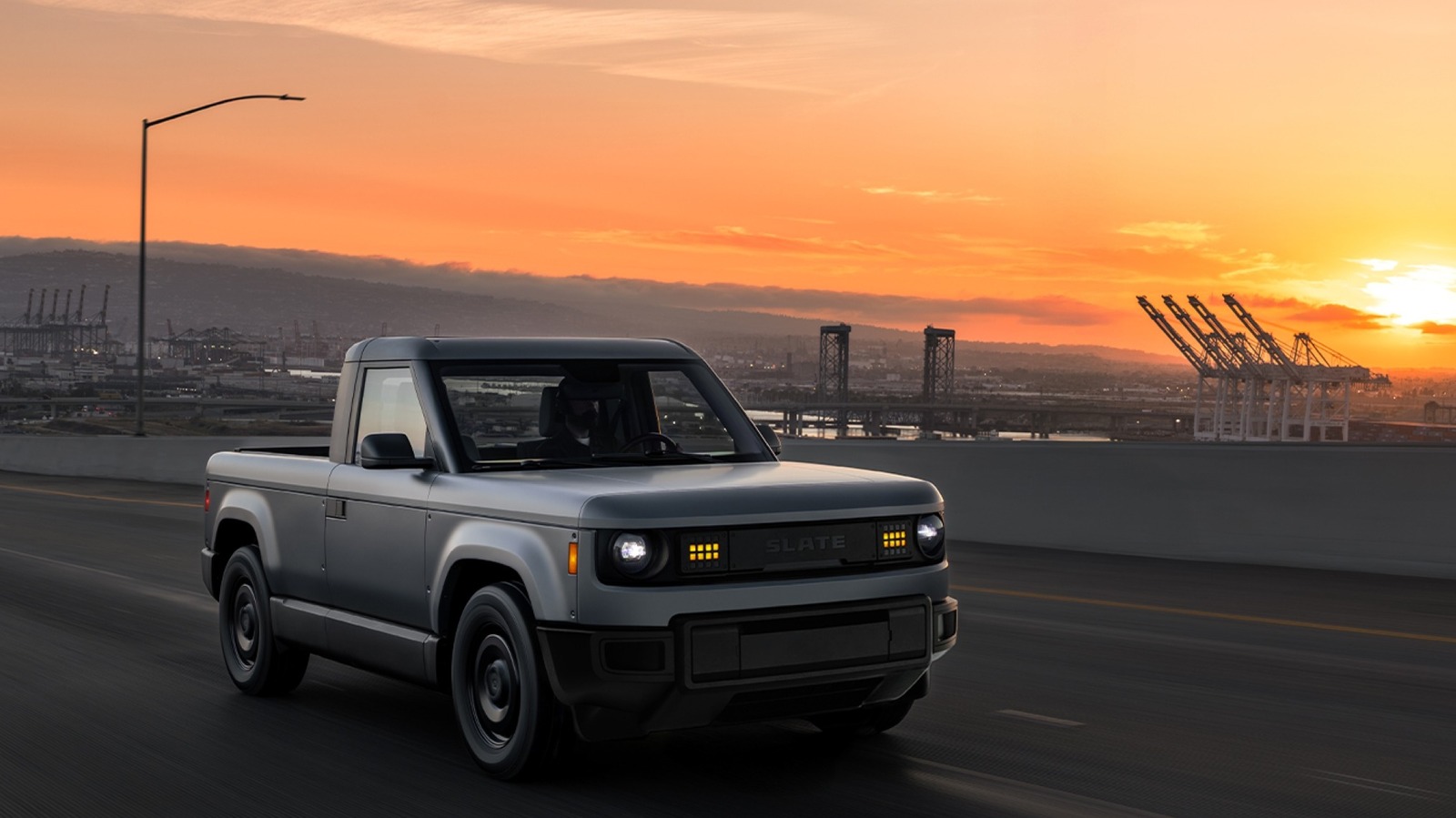
Just as a reminder, the Slate is a radically simplified vision for what a truck can and should be. It is a vehicle lacking all pretensions and luxuries, a minimum viable vehicle in the modern era.
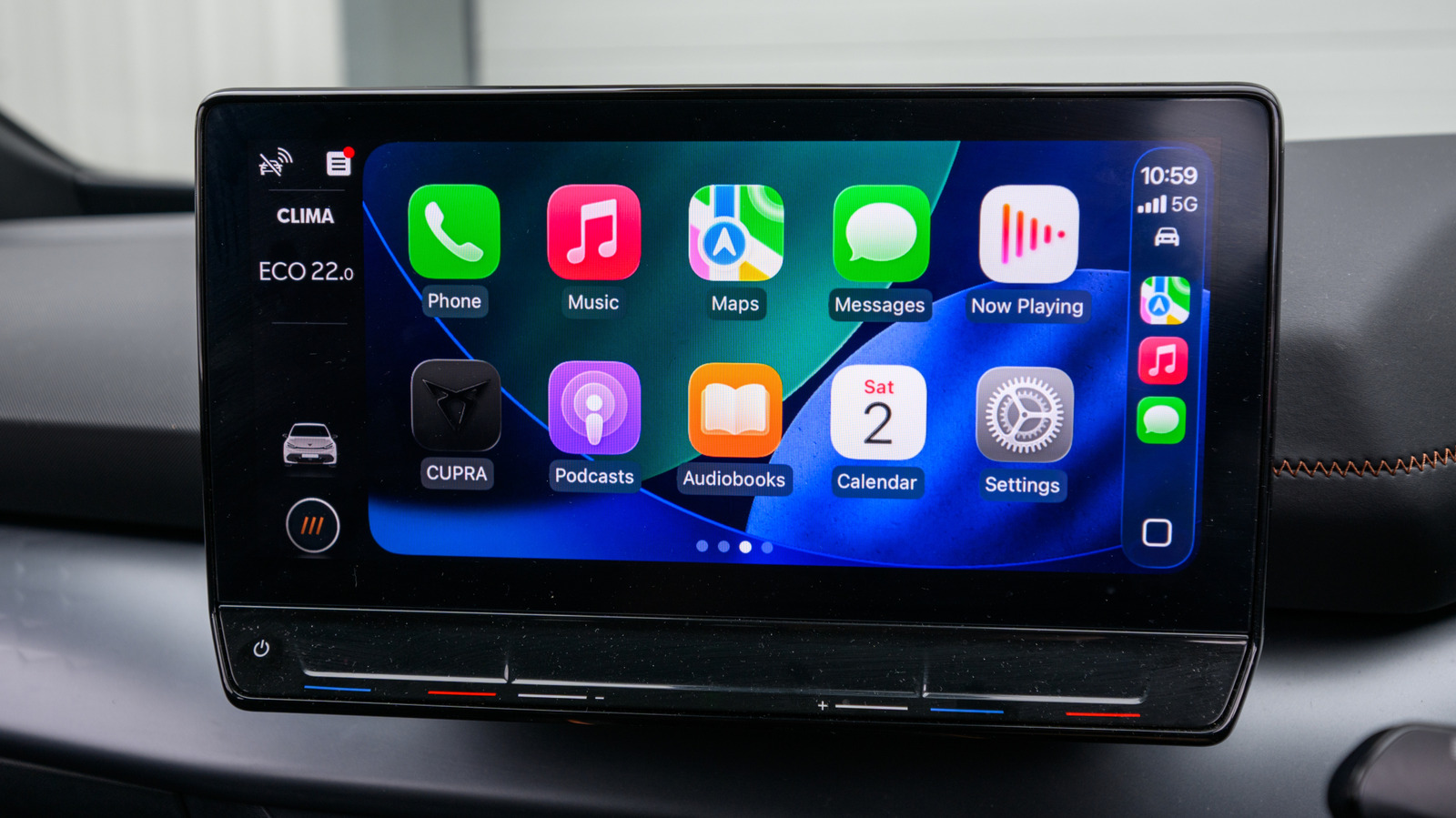
That means a single-motor, 181-horsepower, all-electric truck that can tow 2,000 pounds, haul 1,550 pounds in its five-foot bed, and go up to 205 miles on a charge. It has no paint, no stereo, no touchscreen and no shortage of opportunities for customization.
Slate designers contoured the body to make it easy to wrap in vinyl, meaning if you don't like the primer look, you can quickly and easily slap any color scheme you like on there in just a few hours for just a few hundred bucks.
Don't like trucks? Slate will sell you an SUV kit for $5,000 that you can install yourself, adding a second row of seats and a hard top that covers the bed.
Entry cost is $24,950 to start, a fair bit more than the sub-$20,000 it was supposed to be, but you can blame the federal government for that.
Insert key
You know you're dealing with something a bit different before you even get going in the Slate. The key is a plastic fob, not unlike most modern cars, but if you want to go anywhere you'll need to push it in the dash.
There's a receptacle just to the right of the steering wheel. Pop the key in there, and you're good to go. There's no elaborate boot-up sequence here, no flourish of lights or dramatic startup sound — just a tiny LCD behind the steering wheel that pops to life with zero fanfare.
Pull the right stalk down to put the truck into D, and your drama-free drive awaits.
Under way
The Slate is about as easy to pilot as anything I've been behind the wheel of in years. The throttle response is relaxed, especially in reverse, meaning you can creep this thing carefully in and out of tight spots without worrying about bumping into any obstacles. That said, the lack of paint definitely lowers the penalty of any unintentional contact.
With 181 horsepower, it's hardly a quick machine, but I did manage to spin up the rear wheels not once but twice during my drive. It was more of a chirp than a burnout, but still plenty to make me smile.
The Slate is quick enough in and around town to zip into gaps in traffic and sling away from stop signs with urgency. But by the time you've hit 30, the Truck has run out of steam. I sadly didn't have a chance to hit the highway, but I have to imagine it'd feel awfully relaxed at those speeds, but not unsafe.
Bumps and squeaks
The plastics in the truck are, for the most part, unpleasant to touch and not much better to look at. But instead of this being a drab and unwelcoming space, I couldn't help but think of the potential.
Maybe it's because I'm a 3D printing enthusiast, but as soon as I looked around in the Truck, my mind started churning through the possibilities. Exposed screw heads abound, which would make easy mounting points for everything from flashlight holders to cargo slings.
There's what looks like a standardized T-slot extrusion running across the dashboard, perfect for attaching any number of things. The Slate I drove had the company's smartphone mount on there, which quickly and easily accepted my Galaxy S25 Ultra, putting it in the perfect place for navigation duties.
As far as the car's interface itself, that little LCD behind the steering wheel displays speed, charge and not much else. Throw the truck into reverse, and you get the mandatory rear-view camera. It's a little awkward to see down behind the steering wheel, but visibility out of the truck is so good that it felt redundant.
That's especially true compared to something like a modern Ford F-150 or Chevrolet Silverado 1500, trucks that have gotten so tall they pose a direct risk to anyone standing nearby as soon as they start rolling.
Yes, the windows only go down via crank, which I didn't mind a bit. It's small enough you can reach over and drop the passenger window if you're traveling solo, but the air conditioning was plenty powerful enough to keep me cool with the windows up.
Wrap-up
Yes, the Slate is small by modern standards, but I had tons of headroom, and there was space in the cabin to store my backpack between the seats without issue. Yes, it's slow compared to most other machines on the road, but it's quick enough to keep up with traffic.
And yes, its software experience is virtually non-existent, but given the number of glitches and bugs I've experienced on first drives of cars lately, decreasing the burden here is not a bad thing.
The Slate Truck, then, is shaping up to be exactly what it promised: a bare-bones, just-enough truck with productivity and creativity in mind. There's still time for improvement, and I can't wait for a chance to put one of these to a lengthier, proper test. This thing seems perfect for chore duty, and I have a fair few piling up.
Hopefully, we won't be waiting too much longer. The first Slate Truck models are set to be delivered before the end of the year.