The new design is a big win.
Sam Rutherford for Engadget
RATING : 8.9 / 10
- New wider design
- Brilliant anti-glare displays
- Great performance
- Strong battery life
- Improved wired and wireless charging speeds
- Pricey
- No dedicated zoom cam
- Requires a case or add-ons to use magnetic accessories
After seven generations, Samsung made a huge change to its flagship foldable phone this year: It split the line into two devices. Sitting at the very top is the Galaxy Z Fold 8 Ultra, which looks and feels like a more refined version of last year's handset. And then there's the base Z Fold 8, which to my pleasant surprise, has stolen the spotlight from its more expensive sibling. By borrowing elements from its own back catalog of devices, while also cribbing traits from rivals, Samsung has created a wider, squatter device that combines the best aspects of a smartphone and a small tablet in a single gadget.
Design and displays
Sam Rutherford for Engadget
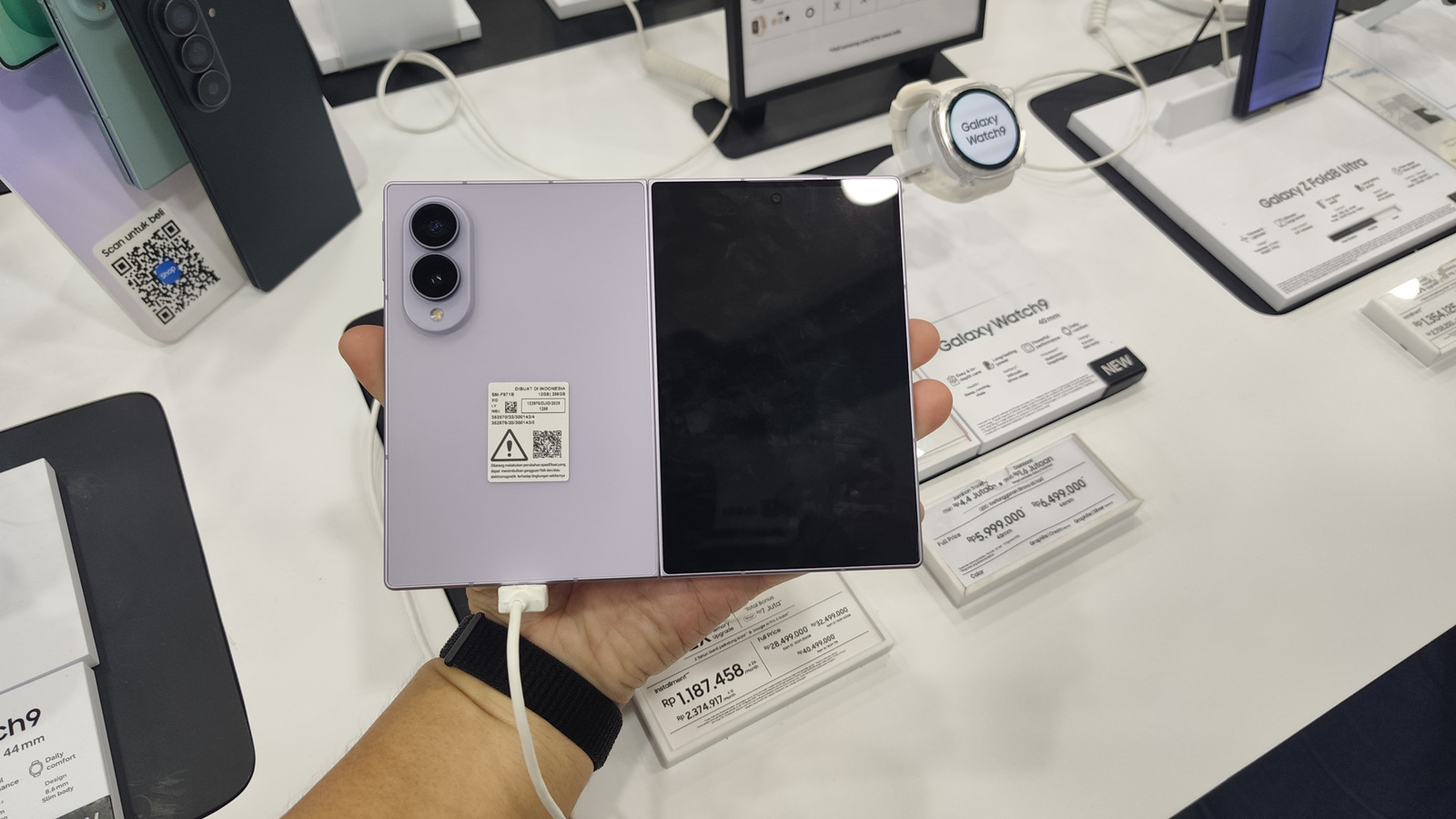
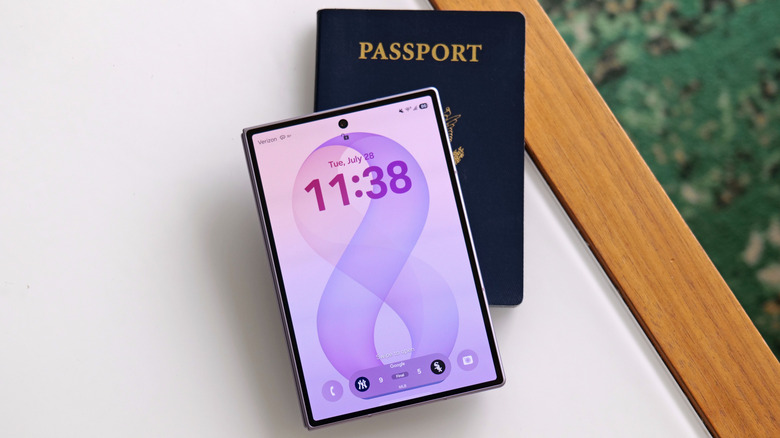
The big change for the Z Fold 8 is reworked dimensions that result in a shorter but wider handset. Its 5.5-inch AMOLED cover screen features a 10:16 aspect ratio, which feels like a callback to the original Pixel Fold and even older handsets before phonemakers adopted the skinnier displays most phones use today. In hand, this throwback design makes the Z Fold 8 feel more like a passport, giving you tons of room to check maps or respond to texts without ever feeling pressured to open it.
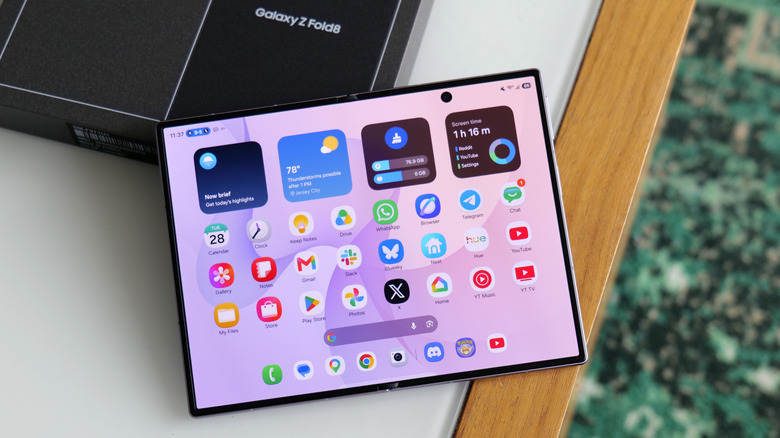
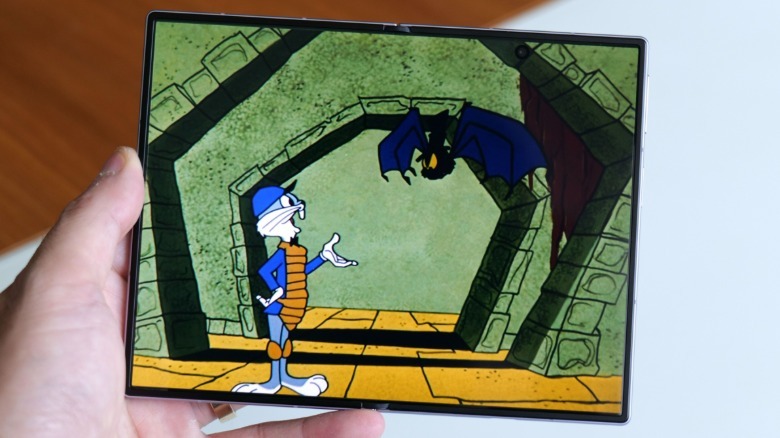
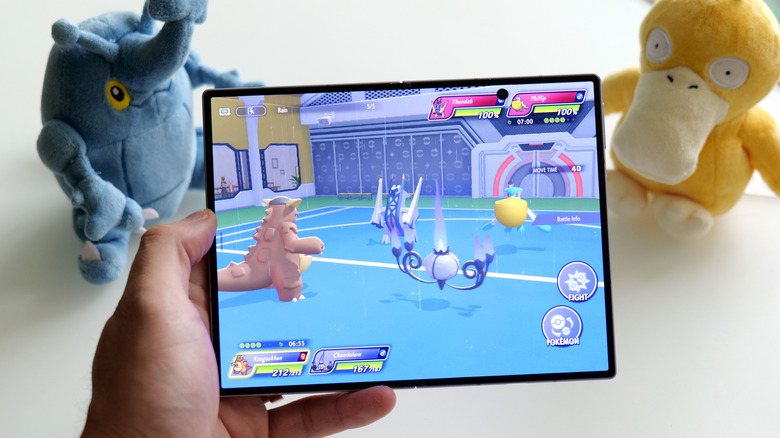
The real payoff for the phone's wider design comes on the inside, where you get a new 7.6-inch AMOLED main display with a 4:3 aspect ratio. Not only does this reduce the amount of letterboxing you get when watching widescreen content, but the base Z Fold 8 actually offers a tiny bit more viewable area when displaying 16:9 shows and movies. And if you prefer older media originally meant for tube TVs, the ZF8's dimensions are perfect. I could watch Looney Tunes all day on this thing, and after recently getting addicted to Pokemon Champions, I found I prefer battling on the Z Fold 8 over the Switch 2 too. Its screen is glorious for landscape gaming, especially when developers put in the effort to support dynamic resolutions.
 Sam Rutherford for Engadget
Admittedly, if you're heavy into multitasking, the Ultra remains the best choice. Its larger 8-inch panel lets you more easily run two full-size apps at once while maintaining extra screen height, which may come into play for serious doomscrollers. But for almost everything else, the base Z Fold 8 is simply a better content consumption device. My one small gripe about this is that when you turn it to portrait mode, your home screen gets all jumbled up because the numbers of columns for apps don't match what you get in landscape.
As for the panels themselves, they are sharp and saturated. Peak brightness has increased to 3,000 nits on both the Z Fold 8 and the Ultra, so there's no discrepancy there between the two models. Samsung added a new anti-glare coating that cuts down neatly on annoying glare without impacting image quality. This also makes the phone easier to open, which I did not truly appreciate until I went back and compared it to last year's Z Fold 7. The dreaded crease is less obvious too.
 Sam Rutherford for Engadget
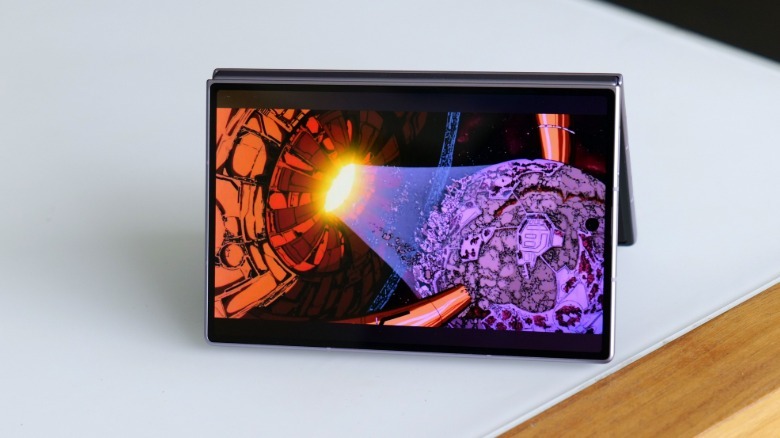
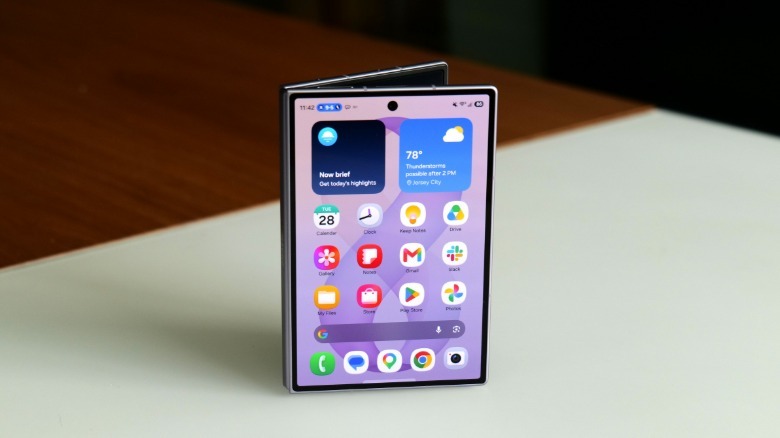
Perhaps the most subtle upgrade is that Samsung finally addressed the previous model's habit of not opening up all the way and stopping short at 179 degrees. The one trade-off to this is that the Z Fold 8 can no longer maintain its position at 90 degrees for tabletop mode. Thankfully, there's a simple alternative: flipping the phone over and using it like a tent, similar to what you'd do with a 2-in-1 laptop.
Elsewhere, the Z Fold 8 features a thoroughly premium build with several titanium layers inside to increase the sturdiness and rigidity of its flexible display. A tough Armor aluminum frame and Gorilla Glass Victus 2 and 3 hold the phone together. There's also a handy side-mounted fingerprint sensor built into its lock button and IP48 dust and water resistance. And while technically at 9.7mm, the Z Fold 8 is a touch thicker than the Ultra (8.9mm) when folded, but anyone who tells you this thing isn't thin enough needs to get their head checked.
Performance
Sam Rutherford for Engadget
Both the base Z Fold 8 and the Ultra are powered by a Snapdragon 8 Elite Gen 5 for Galaxy chip with up to 16GB of RAM and 1TB of storage. This means there isn't really a difference in performance between the two models, which is nice. Granted, it's possible that the Ultra may have a small lead in sustained loads due to its slightly larger overall dimension offering improved thermal distribution, but so far in my testing, I've haven't found any major discrepancies. The standard model makes mincemeat of traditional activities such as side-by-side multitasking and even mobile video editing.
Cameras
Sam Rutherford for Engadget
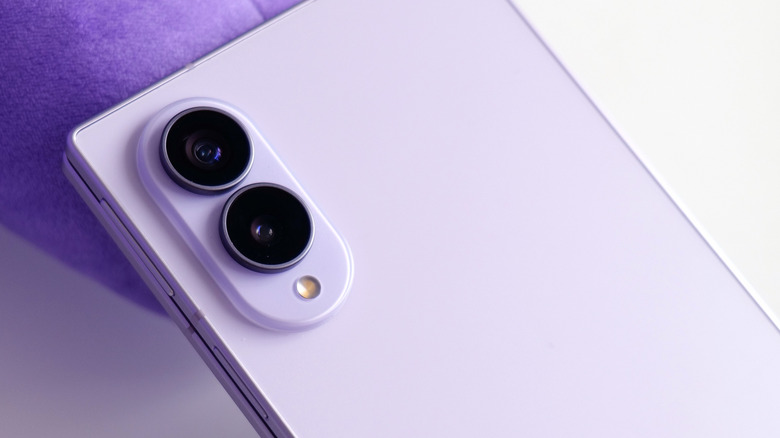
Aside from their screen sizes, the biggest difference between the base Z Fold 8 and the Ultra is their rear camera setup. The standard model comes with a 50-megapixel main sensor and a 50MP ultra-wide. But that's it, there's no dedicated zoom cam like you get on the Ultra. This is probably my biggest issue with the phone because I use the zoom lens when snapping pics way more than an ultra-wide. If giving the base ZF8 a true telephoto zoom was never going to happen, it would have been nice to at least put the higher resolution 200MP main sensor from the Ultra on this model too. At the very least, that would give you a bit more freedom to crop in when needed.
That said, this Samsung's phone still makes portrait shots look nice and crisp, even without the zoom lens present on the other three models. And during the day, the Z Fold 8 had no issues capturing sharp pics with rich, vivid colors. Admittedly, Google's Pixel phones have a small advantage when it comes to low-light shots — especially when it comes to really dark environments and some textures — but Samsung's base foldable more than holds its own.
Battery life and charging
Sam Rutherford for Engadget
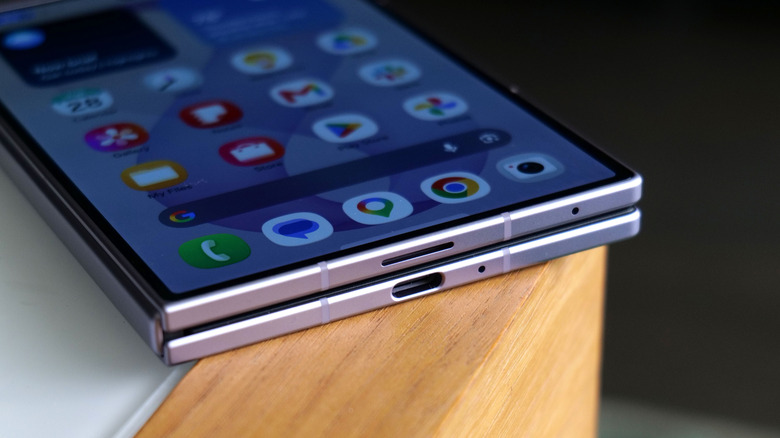
The Z Fold 8 comes with a 4,800mAh battery that's a touch smaller than what you get on the Ultra (5,000mAh), but even so, it's certainly not hurting for battery life. On our local video rundown test, the phone lasted 28 hours and 14 minutes when using its smaller exterior display. Admittedly, the Ultra fared better at over 32 hours, but the base model still has plenty of runtime to easily survive a day of heavy use, even after factoring in plenty of gaming and show watching on its main display.
Additionally, Samsung has given both of its book-style foldables notable upgrades to their charging speeds. Wired charging now tops out at 45 watts (assuming you have the right adapter, because you don't get one in the box) which is up from 25 watts on last year's model. Meanwhile, wireless charging has gotten a smaller boost to 20 watts, up from 15 watts previously. The one caveat is that if you like using magnetic pads or accessories, you'll need to get a compatible case or add-on, because once again, Samsung's focus on thinness caused the company to forgo adding a magnetic ring inside the phone itself.
Wrap-up
Sam Rutherford for Engadget
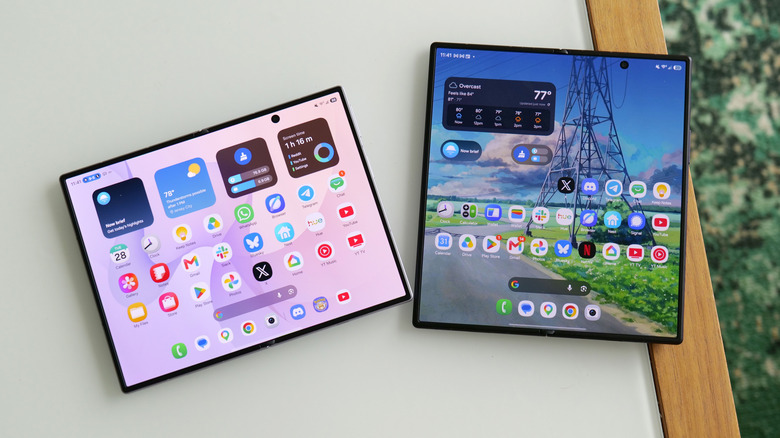
Ultimately, your preference for the standard Z Fold 8 or the Ultra will probably come down to whether you spend more time playing games and watching videos or multitasking. To me, the base model is simply a superior content consumption device. Shows and movies just fit better on the ZF8's wider screens (both inside and out) while the device's smaller dimensions make it a touch easier to carry around. And if you ever run into a situation where an app or webpage functions better in portrait mode, you can always rotate the phone manually. It's that easy.
The base Z Fold 8 also gets the same performance, charging speeds, display brightness and general camera quality as what's available on the Ultra. Its slightly shorter battery life has largely been inconsequential in my experience, which leaves its lack of a dedicated zoom camera as its one major shortfall. But then again, the standard Z Fold 8 costs $200 less than the Ultra, and on a phone that starts at $1,900, any way to lighten the load on your wallet for your next upgrade goes a long way.
 Sam Rutherford for Engadget
By switching up its design and really honing on what people use their phone for the most (aka gorging on games and videos), Samsung has made a brilliant foldable. In fact, it's so good I wish the Ultra got a similar treatment. Regardless of if you're a first-time bendy phone buyer or a returning fanatic, for those thinking about getting a new foldable, the base Galaxy Z Fold 8 is your new prime contender.