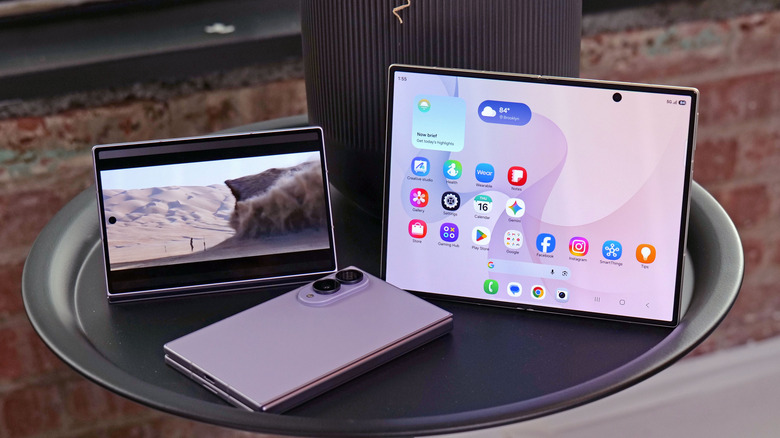
It’s like a Z Fold and the original Pixel Fold had a baby.
Sam Rutherford for Engadget
After seven generations, Samsung is making one of the biggest changes to its flagship book-style foldable phone line since the original came out in 2019: It's making not one but two different versions of the Galaxy Z Fold 8.
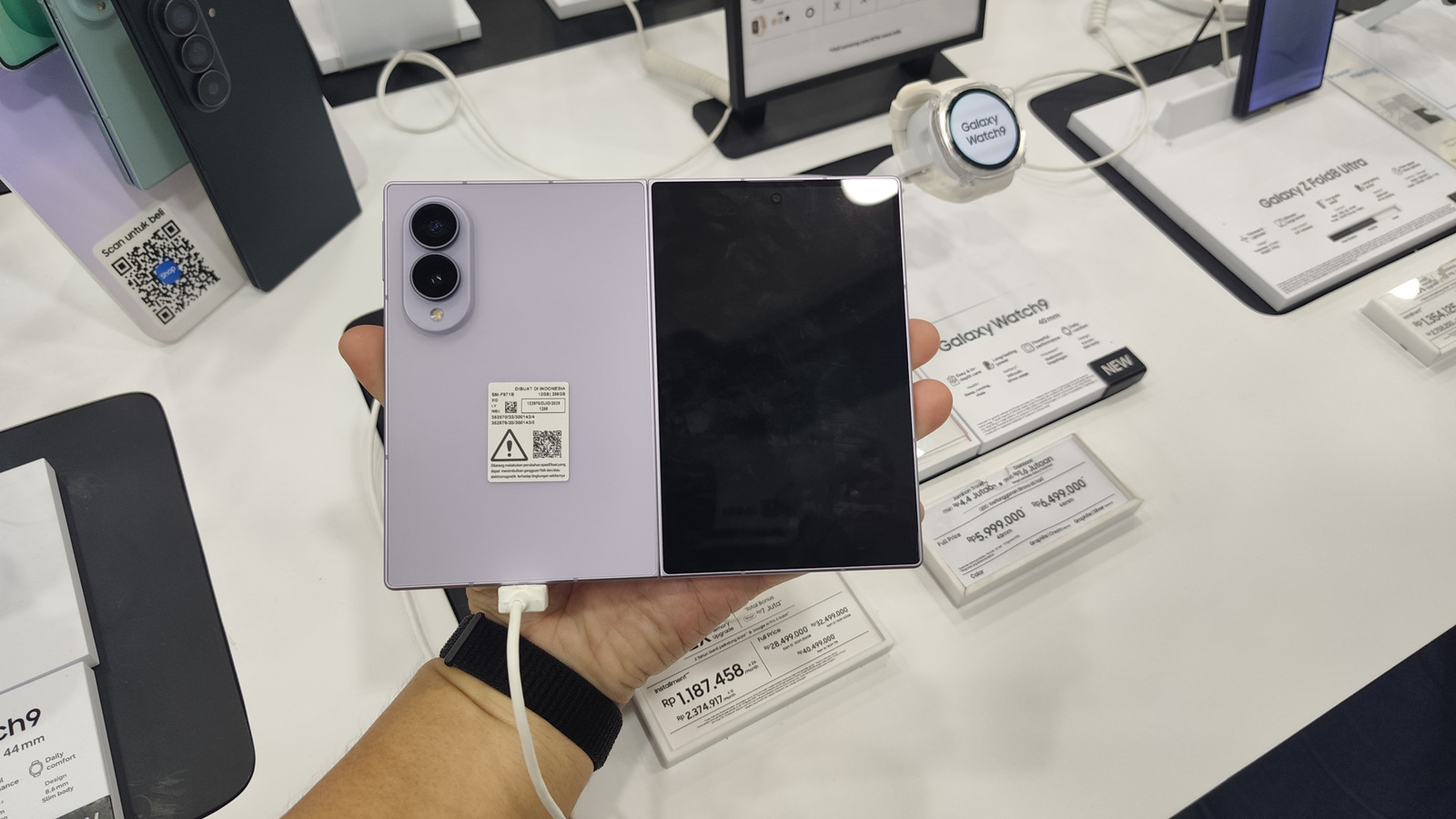
Sitting at the top of the range is the Galaxy Z Fold 8 Ultra, which features a very familiar design alongside improvements to its performance, battery life, ultra-wide camera and more. However, despite its $2,100 price tag, it's actually the least interesting addition to the family. That's because slotting in right underneath the Ultra is a new base version of the Z Fold 8 starting at $1,900. It sports reworked aspect ratios for both its interior and exterior displays that has me thinking that wider really is better.
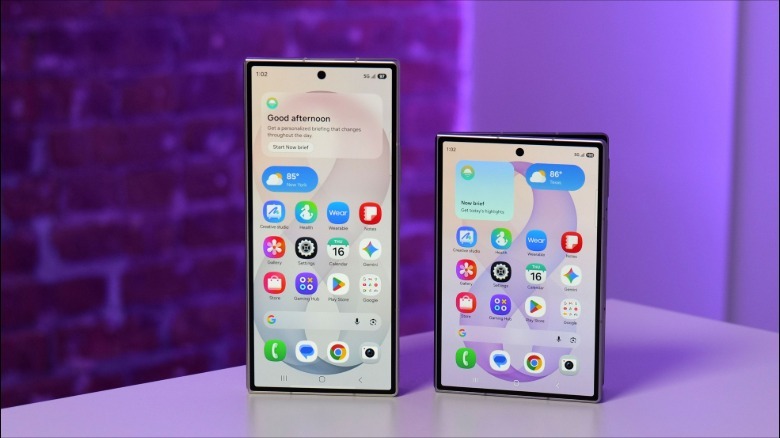
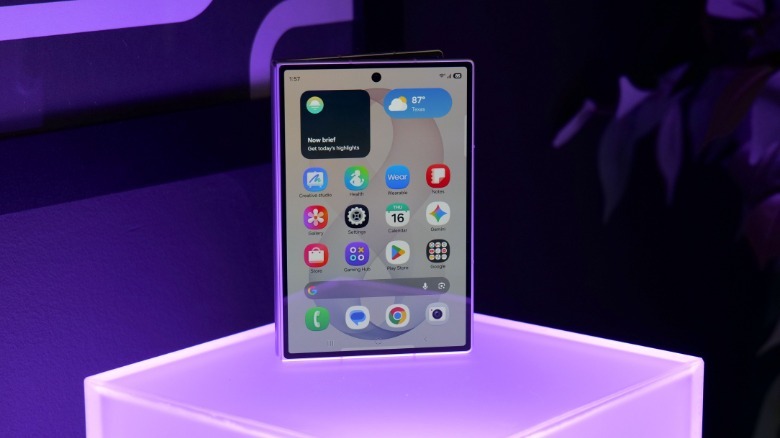
Instead of a long, skinny device that opens up to reveal a nearly square flexible screen, it seems like Samsung has taken a cue from the original Pixel Fold, while simultaneously getting out in front of rumors about the iPhone Ultra, by creating a broader device shaped more like a passport. The result is a squatter device with a 5.5-inch 120Hz AMOLED panel with a 10:16 aspect ratio on the outside that transforms into a small 7.6-inch tablet with a 4:3 aspect ratio on the inside. Now, I will admit that compared to the Ultra, the difference between 4:3 and 1.1:1 doesn't seem like a major change — especially when the Ultra still has a slightly larger overall panel at 8-inches across — but in practice, the impact is unmistakable.
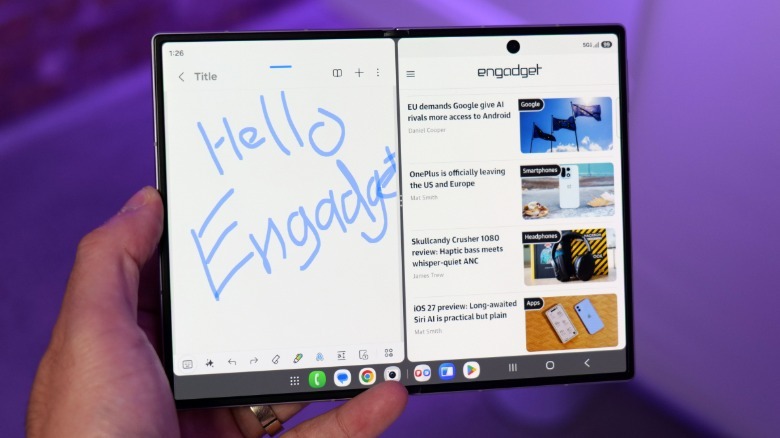
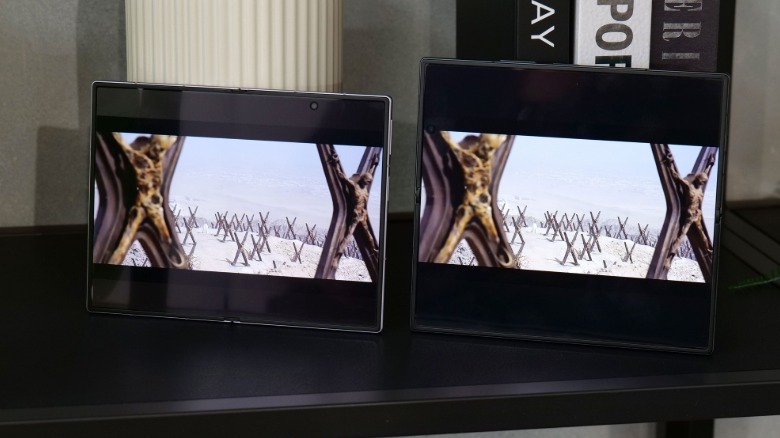
For things like watching movies and TV shows, the Z Fold 8 has noticeably less letterboxing at the top and bottom of its main display, which simply means there's more content to enjoy. This was Samsung's main goal for this new base model, as recent versions of the Z Fold have leaned more heavily on the phone's multitasking capabilities. That said, I would argue that opening two apps side-by-side on the standard Z Fold 8's 7.6-inch panel is just as useful, while the wider dimensions of its cover screen makes it even easier to use for quickly checking messages, looking up directions and more. And you can do so without feeling like you need to open the phone to get to its main display.
 Sam Rutherford for Engadget
Internally, Samsung also says both versions of the Z Fold 8 come with a new flexible titanium alloy that's combined with the existing titanium plate to create an even stronger support system for the phones' bendy displays. This means there should be even less gaps or air bubbles that form between the various layers of the display while also reducing the appearance of a crease. To be clear, there's still a very shallow trough that runs down the center of the screen, but unless you're really looking for it, it's not something that becomes distracting during general use.
Another thing I noticed is that despite the base Z Fold 8 being a touch thicker than its more expensive sibling (at 9.7mm vs 8.9mm), it weighs just 201 grams (vs 215g for the Ultra), which actually makes the standard model the lightest Z Fold ever made. Meanwhile, you still get a very sleek chassis with an aluminum frame, IP48 dust and water resistance, a side-mounted fingerprint reader built into its power button and max brightness that tops out at 3,000 nits — all the same as the Z Fold 8 Ultra.
 Sam Rutherford for Engadget
Of course, Samsung cut a few corners in order to create a device that costs $200 less than the Ultra (or $100 less than the launch price of the Z Fold 7), which in some ways is quite impressive considering the going price of memory these days. The most notable of these is that the base Z Fold 8 only features two rear cameras instead of three. There's a 50-megapixel main shooter and a 50MP ultra-wide, but no telephoto, which is definitely a bummer as I find I use my phone's zoom lens much more than my ultra-wide. But your mileage may vary. It also has a smaller 7.6-inch main display and lower capacity battery than what you get on the Ultra (5,000mAh). But when considering that 4,800mAh is still better than last year's Z Fold 7 (4,400mAh), it's hard to get too upset.
But that's kind of it for compromises, which is significant when you factor in that both the base Z Fold 8 and the Ultra are packing a new Snapdragon 8 Elite Gen 5 for Galaxy chip, up to 16GB of RAM, 1TB of storage and support for 8K video recording. The two models have even received the same boost to charging speeds, which now stands at up to 45 watts when using a wire or 20 watts wirelessly. Unfortunately, as part of Samsung's focus on thinness, the company still hasn't bothered to put magnetic rings inside the phone, which means the Z Fold 8 is merely "Qi 2 ready" instead of fully supporting the spec without help from accessories. The one saving grace to this is that Samsung claims most of its first-party cases will have an embedded magnet, so as long you're not adamant about your phone being naked, functionality remains the same.
 Sam Rutherford for Engadget
After around two hours of checking out the base Galaxy Z Fold 8, my one complaint has more to do with the Ultra than this model. That's because what I really want is a mix of features from both devices. I want the wider aspect ratio displays from the standard version, but with a larger 8-inch (or bigger) flexible panel and all the extra bells and whistles from the Ultra — most notably those three rear cameras. That said, with the base model coming in a bit cheaper, Samsung has created a really compelling device for anyone thinking that it's time to give foldable phones a go.
 Sam Rutherford for Engadget
One last small quirk with the base Z Fold 8 is the due to the springs in its hinge, it can't convert into tabletop mode when bent in half, as the phone will naturally close itself. That's a very small annoyance for anyone who likes to prop their phone up and watch videos while cooking, doing chores and more. Thankfully, you can still position the handset in tent mode, which effectively does the same thing but in a slightly different way.
The Galaxy Z Fold 8 will be available in four colors: lavender, cream, graphite and pistachio (the latter of which is an online exclusive on Samsung.com). Pre-orders are live now, with official sales slated for August 7.